Oldal kiválasztása

About Me

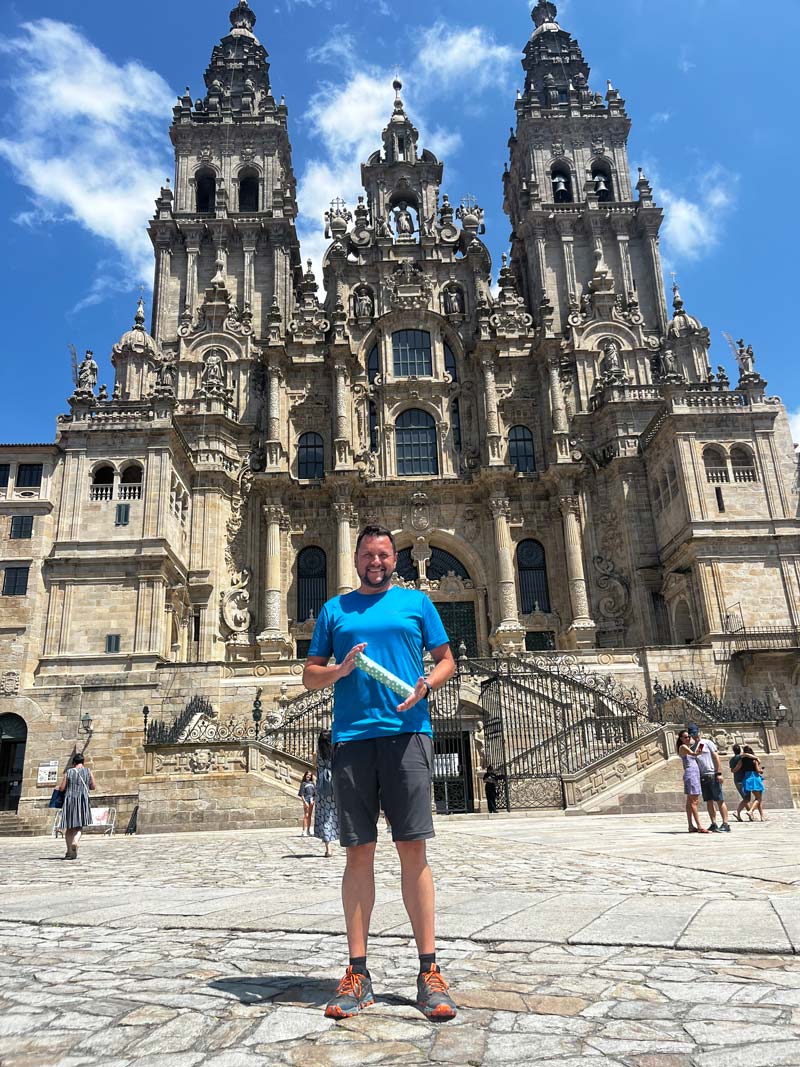
My name is Viktor Vadász. I am an experienced hiker and a professional coach.

I walked my first Camino from Pamplona to Santiago de Compostela in the summer of 2009, which was followed by several other walks in all seasons and on different routes.

I have always been an enthusiastic hiker. I have walked the GR20 in Corsica and the National Blue Trail in Hungary, and I climbed Kilimanjaro. Recently I focused on ultralight hiking and trail running. During the years I tried out different backpacks, shoes, clothes and equipment.

I was born in Hungary in 1979. After finishing law school in Budapest, I started working in the judiciary. For more than 13 years I was a judge in Budapest dealing with criminal cases; for 2 years I was directing the Academy of Justice, the national training institution for Hungarian judges and court staff. In 2021, I moved to Germany, where currently I am the director of programmes at the Academy of European Law, an international foundation providing training on European law for legal professionals

About the Camino

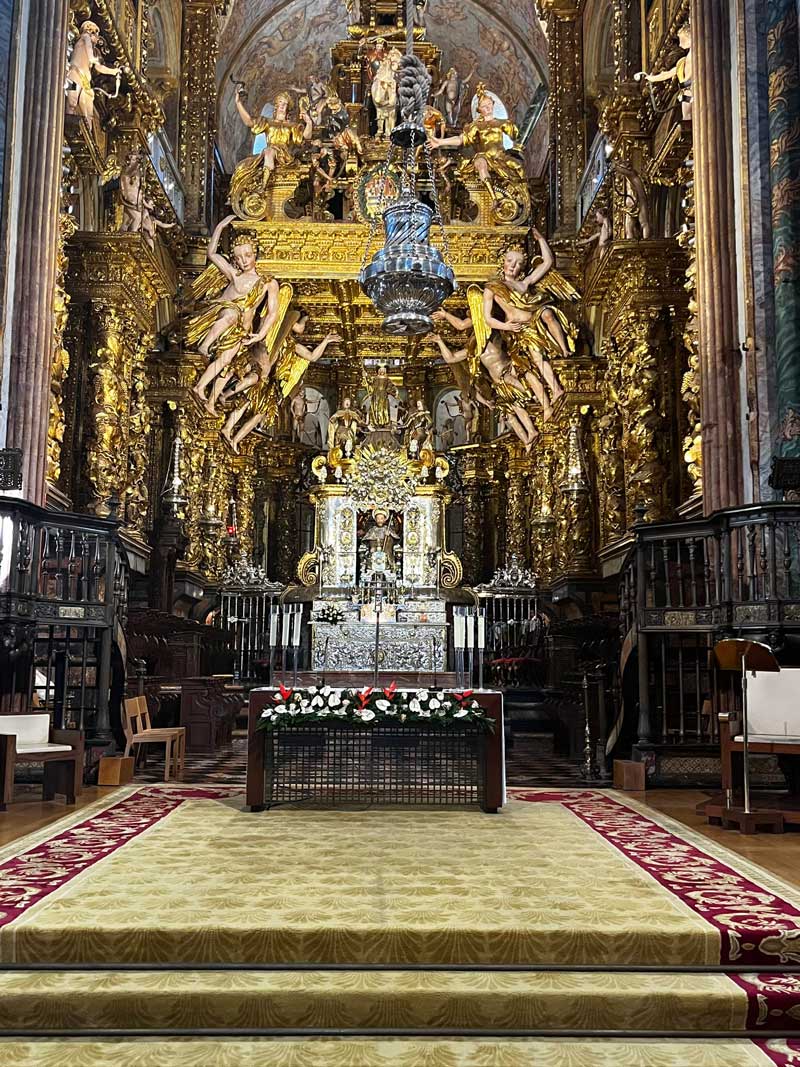
The Camino de Santiago is a network of pilgrimages leading to the shrine of the Apostle James in the Cathedral of Santiago de Compostela, where his remains are interred.

Pilgrims traverse its routes as a means of spiritual reflection or retreat for personal growth, though the Camino is also popular among hikers, cyclists, and organised tour groups. This pilgrimage originated in the early 9th century following the discovery of the relics of the Apostle James, becoming a significant route for mediaeval Christianity from the 10th century on. The Camino de Santiago is one of the three great pilgrimages of Christianity, alongside those to Jerusalem and the Via Francigena leading to Rome. In 1987, the Camino was declared the first Cultural Route of the Council of Europe.

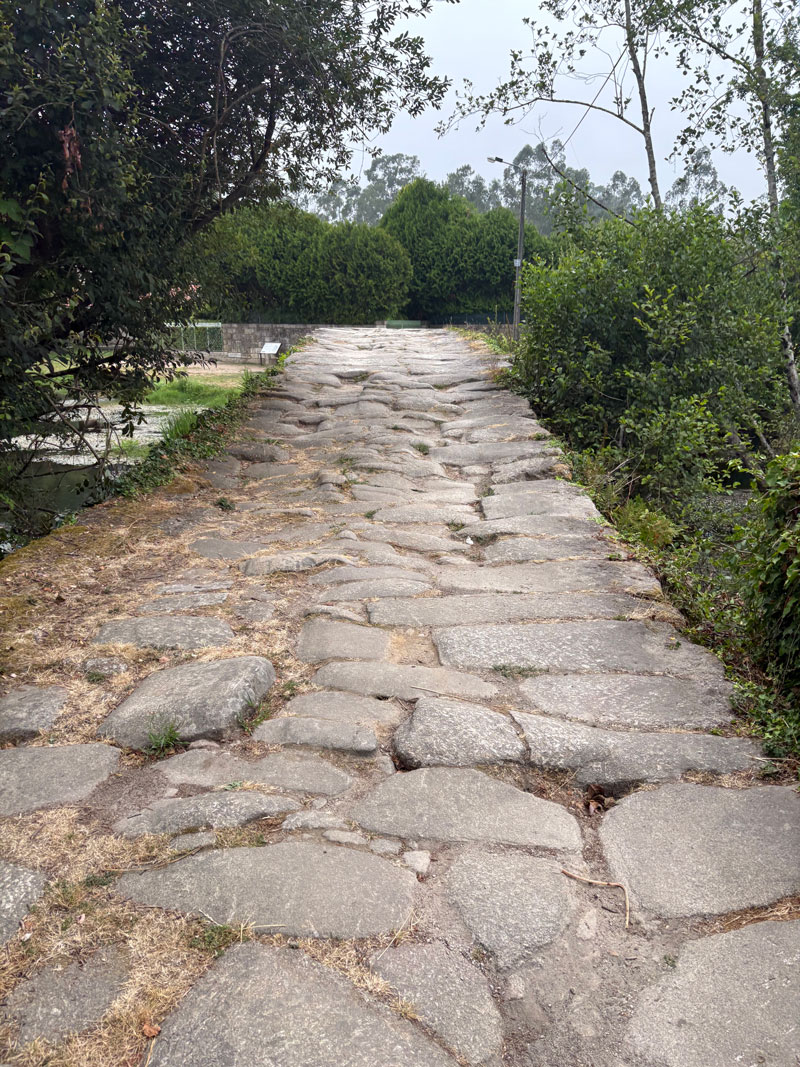
To obtain the official certificate (the Compostela), one must walk 100 km (63 miles) on foot or the last 200 km (126 miles) by bike or horse. All routes are clearly marked with yellow arrows or a yellow shell on a blue background, so typically, there is no need for a GPS tracker, app, or map. However, in urban areas, it is advisable to pay closer attention to avoid straying from the designated path.

Since 2013, the Camino has become more popular and attracts hundreds of thousands of pilgrims each year. The pilgrims have doubled in the past decade. In 2024, Santiago de Compostela welcomed a record-breaking number of pilgrims. Around 500,000 people finished the pilgrimage and received an official certificate from the Pilgrims’ Office.
HOW TO PREPARE?

Every remarkable adventure starts with a strong foundation.

Some people start preparing years in advance; others decide suddenly, book their flight overnight and follow their intuition. I provide step-by-step guidance on the essentials of Camino preparation, empowering you to embark on your journey with confidence and tranquillity. I tailor my assistance to meet your specific needs. Where do you need help? Do you require assistance with technical preparation, logistical steps, or mental or spiritual preparation? We can discuss these in a discovery call, but let me give you some hints here too.

  • The first step will be setting the frames. You will need to decide on which route you take, the starting point, and the duration.
  • You also want to plan your budget for your trip. The money you spend depends on many individual factors, but you can prepare in general with some foreseeable daily costs.
  • The second step is to plan your travel to the starting point and your return home. If you find it useful, I can help you with the planning so you can focus on the experience rather than logistics.
  • You can use an app to customise your route according to your degree of fitness, or I can provide you with an itinerary and guide that you can alter as you go.
  • You will also need a pilgrim passport (credential), which you can order or buy at the starting point, but I can also ship you one.
  • Drawing on my experience, I can help you to choose the best gear and clothing suited to your unique adventure. The option I recommend is lightweight, affordable, reliable, and designed to support you every step of the way.
  • Our body is our most steadfast companion on life’s journey. I can assist you in evaluating your current fitness level. With a customised fitness plan designed and reviewed by a professional trainer and a physiotherapist, I guide you in developing endurance, resilience, and strength.
  • If you find it more comfortable, I can assist you with the accommodations or arranging baggage transfers. I can recommend reputable local service providers to guarantee a seamless, safe, and stress-free experience, allowing you to be fully present on your walk each day.
  • If you wish, before embarking on your journey, I provide personalised online pre-Camino coaching sessions to examine aspects of your lives that you wish to transform. I can assist in uncovering your true intentions and laying the groundwork for meaningful change.
  • I can offer personal on-the-way coaching in the crucial early days (the first 3 to 5 days) of your pilgrimage to help you adjust your mindset, sharpen your focus, and fully embrace the journey ahead.
  • The conclusion of the journey marks the commencement of a new chapter in your life. Through an online post-Camino assessment, I integrate the lessons, insights, and breakthroughs gained from your pilgrimage into your daily lives, ensuring that your personal growth continues to develop long after your return home.
  • The pilgrimage is a great chance to practise walking meditation, which helps you be present with each step, breath, and sound. There are both simple and profound techniques that can enhance this experience, such as walking without haste, feeling our feet connect with the earth, or appreciating beauty without judgement. Reflection deepens spiritual insight.
  • I encourage you to engage in daily journaling, posing questions such as “What did you notice today, both externally and within yourself?”, “What burden are you ready to release?”, “What lessons are you learning about trust, surrender, and resilience?”, “What insights does this experience offer about your identity?”, and “Which part of yourself is prepared for healing?”
  • The Way of Saint James has been travelled by other pilgrims before you. For instance, Saint Francis is believed to have walked the Camino to Santiago around 1214. His pilgrimage was a true expression of humility and peace. Saint Brígida and her husband, Ulf Gudmarsson, undertook a pilgrimage to Santiago de Compostela together. Their walk became a turning point of conversion and mutual spiritual renewal. For them, the pilgrimage was not only an act of devotion but a shared journey of healing and love. San Roque, the French pilgrim and protector against plague, is often depicted with the scallop shell of Santiago. Though not confirmed as a Camino pilgrim, his legend became intertwined with the pilgrim culture. Many Camino churches and chapels are dedicated to him.
  • The founder of the Society of Jesus (Jesuits), Saint Ignatius of Loyola, was a man of faith and a spiritual traveller. As a soldier seeking fame, his Image16 path starts with worldly ambition and ends with deep spiritual discovery and inner freedom. Going barefoot, pleading for food, and surrendering to God’s will, he set off on a journey to Montserrat and Manresa. He had a tremendous spiritual experience during this time, which served as the foundation for his masterpiece, the Spiritual Exercises, a useful manual for discovering one’s innermost goals, hearing the voice of God, and directing one’s life towards a greater purpose.
  • While the Buddha didn’t walk a Camino in the Western sense, his entire spiritual life was a journey of seeking, walking, awakening, and sharing, the very essence of pilgrimage. Prince Siddhartha Gautama left his royal life of comfort after seeing human suffering, old age, illness, and death. His departure was a pilgrimage of renunciation: leaving behind attachments and illusions to search for truth. Siddhartha wandered across northern India, walking from teacher to teacher, forest to forest. His journey was long, uncertain, and filled with inner struggle. This is the pilgrim’s path of testing, learning, and letting go. After years of walking and seeking, Siddhartha sat beneath the Bodhi Tree in Bodh Gaya and vowed not to rise until he found truth. His enlightenment was the fruit of his pilgrimage, a journey from ignorance to awakening, from self to compassion.
  • In biblical times, Jews were commanded to go on pilgrimage to Jerusalem three times a year, during the major festivals known as the Shalosh Regalim: Passover, celebrating freedom and the Exodus from Egypt; Shavuot, the giving of the Torah at Mount Sinai; and Sukkot, remembering the journey through the wilderness. These were not just journeys of obligation but spiritual homecomings, where pilgrims ascended to the Temple Mount, bringing offerings of gratitude and joy.
To discover more about how I can help you
prepare for the journey, book a free discovery call

or contact me via email.

Endangered Wildlife

Lorem ipsum dolor sit amet, consectetur adipisicing elit, sed do eiusmod tempor incididunt ut labore et dolore.

Eco lodges & tours

Lorem ipsum dolor sit amet, consectetur adipisicing elit, sed do eiusmod tempor incididunt ut labore et dolore.

Epic journeys

Lorem ipsum dolor sit amet, consectetur adipisicing elit, sed do eiusmod tempor incididunt ut labore et dolore.
Exclusive Offer

Get 30% Off Your First Trip

Duis aute irure dolor in reprehenderit in voluptate velit esse cillum dolore eu fugiat nulla pariatur.