
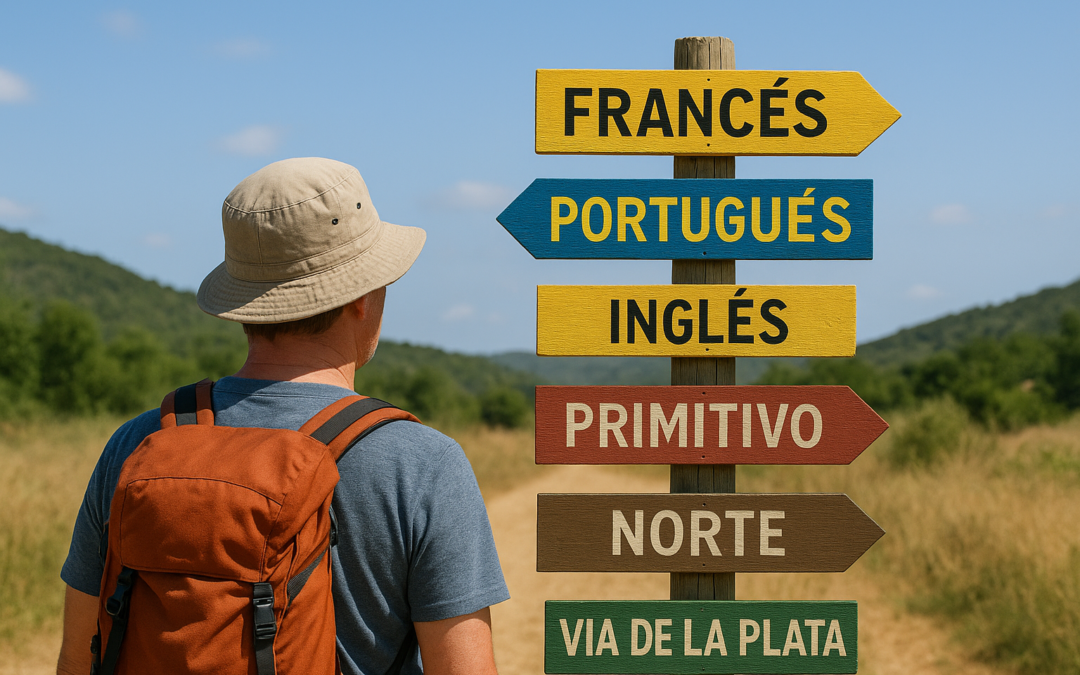
When planning your Camino, choosing the route is one of the first and most important decisions. With so many possibilities, it can feel overwhelming, especially if the trip is your first pilgrimage. Every route leads to Santiago de Compostela, and each offers a different rhythm, landscape, and atmosphere. The key is to choose a route that fits your time, physical condition, and intentions for the journey.
First, define the time available for you. This will immediately narrow your options and make the decision easier. If you only have a week, you can still walk 100-120 km to Santiago. If you have 2-3 weeks, you can have a deeper, more transformative Camino experience. With 4 weeks or more, a new door opens towards longer, quieter routes or a combination of different routes. Your Camino should support your life circumstances, not compete with them. Tip: Two or three weeks should be plenty of time to enjoy a real transformative journey. With only a week, you can still accomplish 100 km of walking, and you will be entitled to receive a certificate of completion (Compostela).
If you have only 1 week for the Camino, these starting points are perfect for a meaningful Camino experience:
Sarria: (Camino Francés) The most popular final section with excellent infrastructure.
Tui or Valença: (Portuguese Central Way) This route offers a balance of culture, history, and friendly towns.
Baiona: (Portuguese Coastal Way) Ideal if you love the sea and a softer introduction to the Camino.
Ferrol: (Camino Inglés) The shortest certified Camino starting point in Spain.
If you can spend two to three weeks on the Camino, you allow space for real inner change. This is when the Camino rhythm settles in, when reflection deepens, and when the walk becomes more than just a physical challenge.
The most famous and best-equipped route is the Camino Francés. The route provides excellent and affordable opportunities for accommodation and food, has a strong pilgrim community, and offers a diverse and sometimes challenging terrain. It can be a bit crowded, especially between May and October, but it is a wonderful choice for first-time pilgrims who appreciate social connections. The official starting point is in the Pyrenees Mountains in the French border town called Saint-Jean-Pied-de-Port (30-35 days). Popular starting points are Pamplona (28-32 days), Logroño (26-28 days), Burgos (20-24 days), and León (12-14 days).
The Portuguese Way is physically less demanding than the French Way and popular year-round. It has gentler elevation, warm hospitality, cultural richness, and the starting points are easily accessible (Porto or, for a longer pilgrimage, Lisbon). The Portuguese Coastal Way is increasingly popular these days, especially in spring and summer. During the summer, the coast is filled with pilgrims, who would like to enjoy the stunning ocean views and flatter terrain. Many pilgrims choose to start on the Coastal Way and later switch to the Central Way. In Redondela, both routes naturally merge. Popular starting points are Lisbon (25-30 days), Fátima (15-18 days) and Porto (11-14 days).
For pilgrims seeking nature and challenge, I would recommend the Camino Primitivo, where the daily elevation often exceeds 1,000 metres. The route is less crowded and offers spectacular landscapes. The effort yields rich rewards if you appreciate mountains and solitude. The official starting point is in Oviedo, with the closest accessible airport being Asturias, and from there it takes 12-15 days to complete.
The Camino del Norte is one of the longest routes starting in Irún. This route is also mountainous, and the terrain is more demanding. You will see picturesque fishing villages along the dramatic coastline and green landscapes, but it has less infrastructure than the French or Portuguese Way; therefore, you need to spend more money and plan your pilgrimage in advance by booking accommodation. You can also walk this route in stages or choose a later starting point. The route starts at the French border in Irún (32-38 days), but there are several starting points with easy access, like Bilbao (27-32 days), Santander (21-26 days), or Gijón (15-18 days).
The Via de la Plata, the Silver Way, starts in Sevilla and stretches from south to north. This western part of Spain is less populated, and the vast open landscapes offer time for quiet reflections. This route is not recommended between May and October due to extreme heat. Possible starting points are Sevilla (40-50 days), Mérida (32-38 days), Salamanca (20-25 days) or Zamora (15-18 days).
Tip: Choose your route and starting point based on the season and according to your physical condition and intentions. In the winter, I recommend the French or the Portuguese Way. If you have enough time, the Via de la Plata can be an excellent choice during early spring and late autumn. For summer, the Primitivo and the Norte offer more solitude, while the French and Portuguese ways will be very busy. If you are looking for physical challenges and your fitness level allows it, your choice might be the Primitivo or the Camino del Norte. In the wintertime, these routes won’t have enough accommodation, and the first stages of the French Way (between Saint-Jean-Pied-de-Port and Roncesvalles) are also closed. Always consider daylight hours and weather conditions. In the winter, your backpack will be heavier, days will be shorter, and you will walk shorter distances than in the summer.
Many pilgrims choose not to stop in Santiago. Continuing to Fisterra or Muxía adds another 4-5 days and brings you to what was once believed to be the end of the world. It’s a powerful and peaceful way to close the pilgrimage. Tip: Make sure you have an additional day, if not two, in Santiago to enjoy the city. You will meet many people whom you passed during the pilgrimage, and there are many things to see in Santiago.
If you feel unsure, I can help you to choose the route that best fits your life, body, and inner journey. Further details about the route descriptions are available on the website.
Buen Camino, and may the path you choose serve you well!
Tips:
1. First define how much time you can spend on the Camino.
2. Second, choose the time of the year when you can do the Camino.
3. Based on the season, your general physical condition and your intention, choose an easy or challenging, less or more crowded route.
4. Make sure you have enough time in Santiago to enjoy and celebrate your arrival.