
The shoes you wear on the Camino are the most important thing you have. They will guide you through every step, problem, and view. Choosing the right pair can make a big difference in your trip, changing it from a painful struggle to a happy, grounded experience. I’ll show you the most important things to think about when choosing your Camino shoes in this video. These include how they fit, what they do, the terrain, and the time of year. This guide will help you walk with confidence, comfort, and peace of mind, whether you’re trying to decide between trail runners and hiking boots or just want to avoid common mistakes. Happy feet make for a happy pilgrimage, after all.
One of the most common questions future pilgrims ask is, “What shoes should I wear on the Camino?” The truth is, there’s no single perfect answer. Pilgrims walk in everything from sturdy hiking boots to sandals, and yes, even barefoot. But after many journeys on different routes and in different seasons, I’ve found a combination that truly works. Here’s my personal advice to help you choose well and avoid painful mistakes.
The shoes you wear can have a big effect on your Camino experience. Every day, you’ll walk a long way, often on a mix of surfaces like dusty tracks, forest paths, asphalt, gravel, and even some muddy areas. Wearing the wrong shoes can cause blisters, knee pain, sore ankles, or just make you tired. The right shoes, however, feel almost invisible. They let you focus on the journey rather than your feet. Tip: don’t bring brand new shoes that you haven’t worn before. Break in your shoes on long training walks before the Camino. Your feet and shoes need time to get to know each other, and the Camino is not the right time and place to experiment with a new pair of shoes.
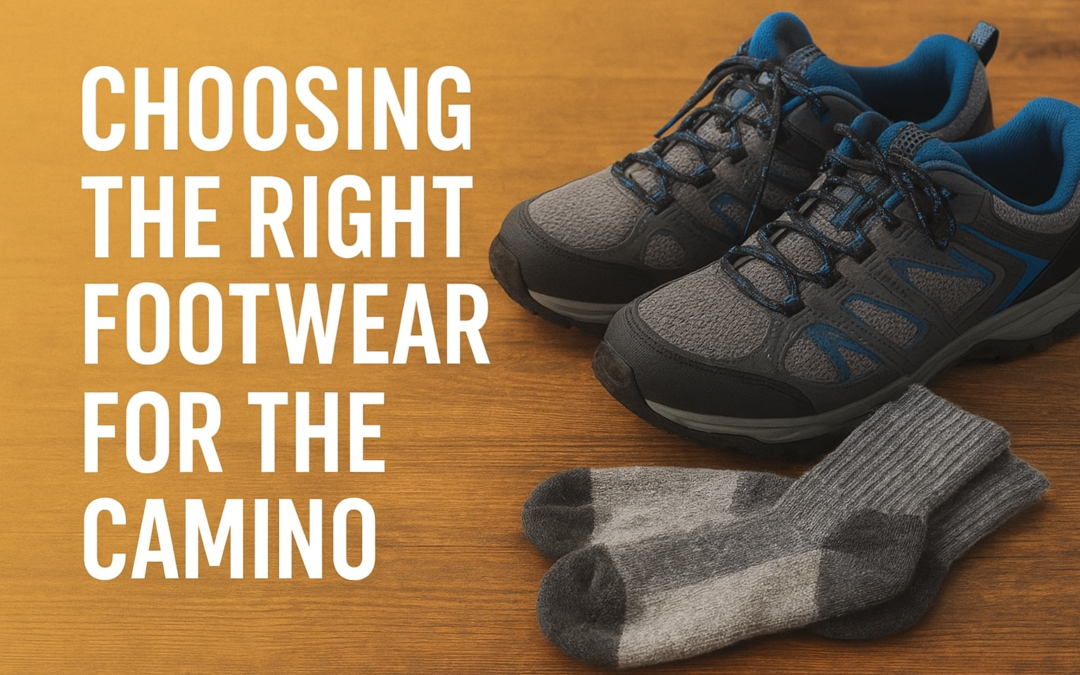
In warm weather, trail running shoes are my absolute favourite. Over the years, they’ve proven to be reliable, comfortable, and perfectly suited for the Camino’s varied paths. The biggest advantages are that they are lightweight, breathable, have a sturdy grip and dry quickly. You lift your feet thousands of times per day; lighter shoes make a big difference. These are also ideal for hot summer stages where your feet need airflow, and if you’re caught in a rain shower, they dry much faster than boots. Trail running shoes are designed for mixed terrain; they handle loose stones and uneven paths with ease. Tip: A proper runner’s knot provides secure ankle support without the stiffness of boots. I show you how to lace a runner’s knot in the video below.
Winter walking introduces a different set of challenges: damp mornings, colder temperatures, frequent light rain and muddy, slippery roads. For these conditions, I prefer Gore-Tex sports shoes; these are waterproof in light rain, so they will keep your feet dry enough without the heaviness of full hiking boots. They are warm enough but not bulky, perfect for chilly mornings on the Meseta or in the Galician hills. Contrary to hiking boots, they have a flexible sole, which is more comfortable during long walks. Gore-Tex shoes are excellent for light rain or moist paths, but in heavy, continuous rain, no shoe stays dry for long. Always manage expectations. Tip: To dry wet shoes, ask for old newspapers at the albergue and stuff them inside. The paper absorbs moisture surprisingly quickly, especially overnight. Replace the damp paper once or twice if needed. Avoid leaving shoes too close to heaters, as excessive heat can damage the material. With a bit of patience (and plenty of newspaper), your shoes will be ready for the next day’s stage.
Socks are just as important as footwear. I highly recommend using hiking socks that are made to keep your feet from getting blisters. They absorb water, reduce friction, and make your steps softer. I always have an extra pair of socks in my backpack, and I change them every 15 to 20 kilometres. This keeps my feet dry and makes it less likely that I’ll get blisters. Tip: Hang your used pair on your backpack to dry while you walk; the sun and wind work wonders.
Every pilgrim is different, but comfort, breathability, and practicality matter more than brand names or trends. Whether you choose trail runners, waterproof sports shoes, or something else, make sure your shoes are well broken in, you’ve walked long distances in them before starting the Camino, you pack the right socks, and you listen to your feet each day. There will be hard times, beautiful sights, and quiet happiness on your Camino. If you wear the right shoes, you’ll be able to walk with confidence and focus on what’s really important: the journey itself.
Buen Camino, and happy walking!
Tips:
1. Bring shoes that you have already walked long distances in.
2. Use proper lacing technique to secure your ankle support.
3. If your shoes are wet, use newspaper inside to absorb the moisture.
4. Change your socks once a day and dry your socks.