
YOUR CAMINO GEAR
Based on my experience, many pilgrims carry more things than they really need. I can help you choose the best clothes and gear for this one-of-a-kind adventure: things that are light, affordable, dependable, and made to support you on the way.
The right gear can make a big difference in your trip.
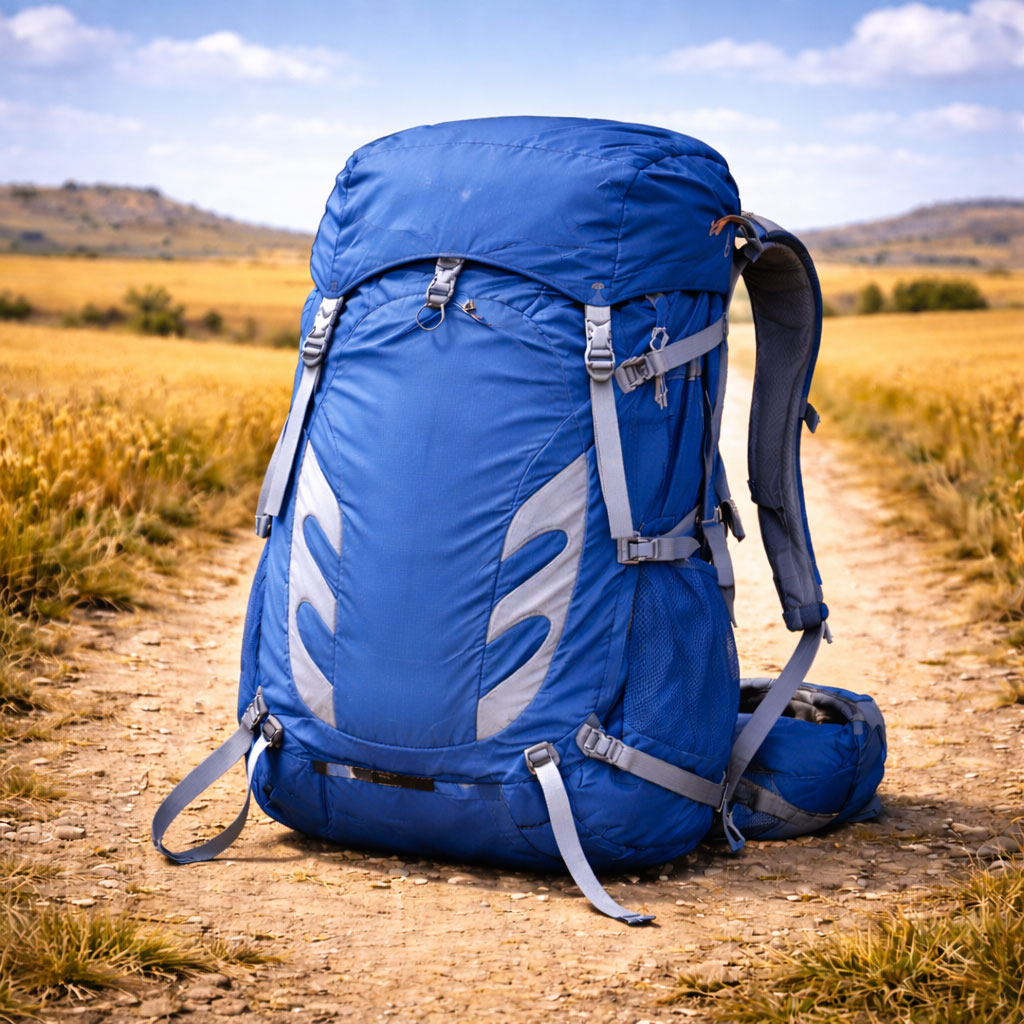
BACKPACK
I recommend carrying a medium-size, lightweight backpack equipped with a waist belt. Medium size means that you should look between 30 litres and 45 litres capacity. Since you will walk a lot every day, it’s crucial to have a comfortable and lightweight backpack. Weight will be important, because you shouldn’t carry more than 10% of your weight.
My experience is that you can reduce the size of your gear and clothes to 20-25 litres and the weight to 4-5 kilogrammes, which is not only ideal for walking but even makes it possible to run on certain parts of the route if you wish. Among the recommendations, you can also find some bags designed for running.
The small bags can be carried on, so you can fly without checking luggage. My blogs have more information on how to choose your rucksack and how to pack for the Camino.
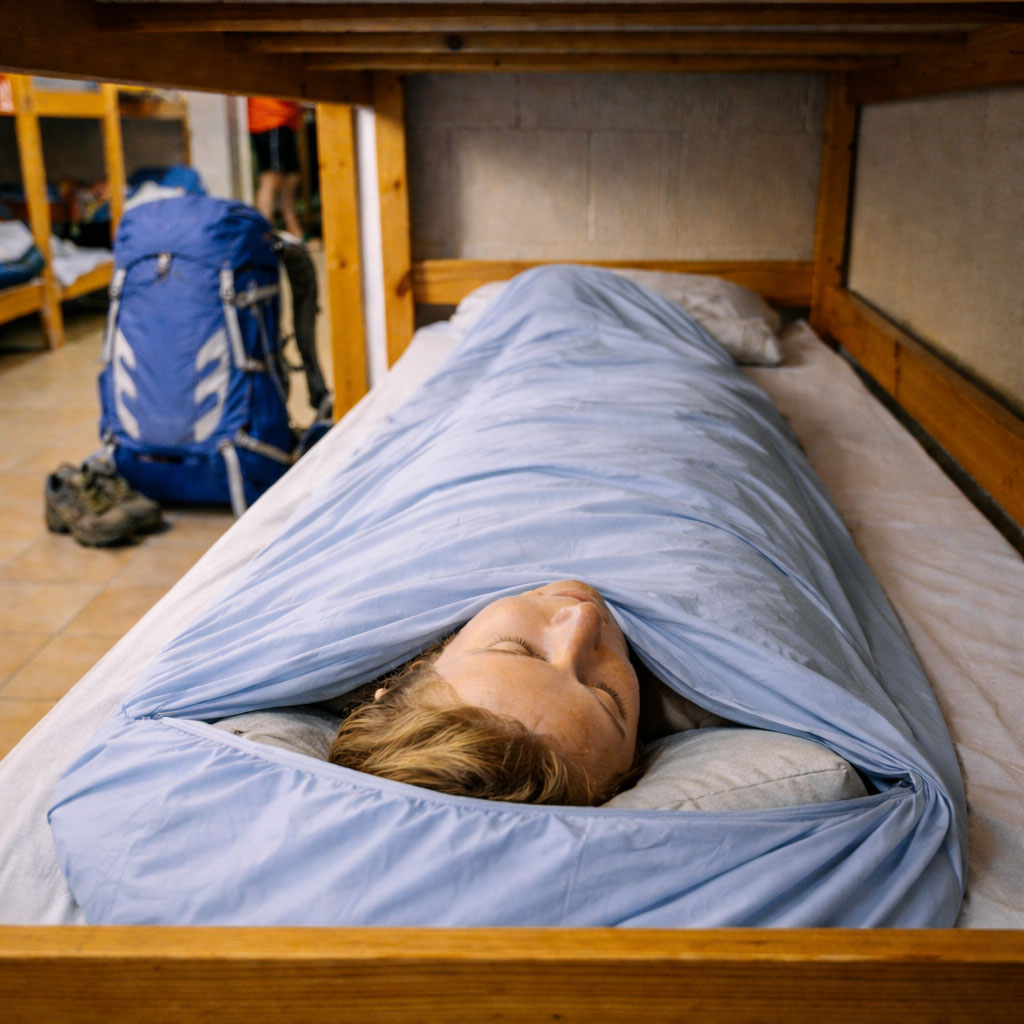
SLEEPING BAG / LINER
Although the accommodations you will be staying in (albergues, hostels, hotels) can provide blankets and sheets, it is advisable to bring a lightweight sleeping bag or (in the summer) a liner with you.
The advantage of a liner is its small weight and size; however, it may feel a bit cold at night, particularly if the albergue is located in an old parish building with thick walls.
The blankets provided may not always be totally clean, and it is wise to take precautions against bedbugs. Even if you opt to use your sleeping bag, bites can still occur.
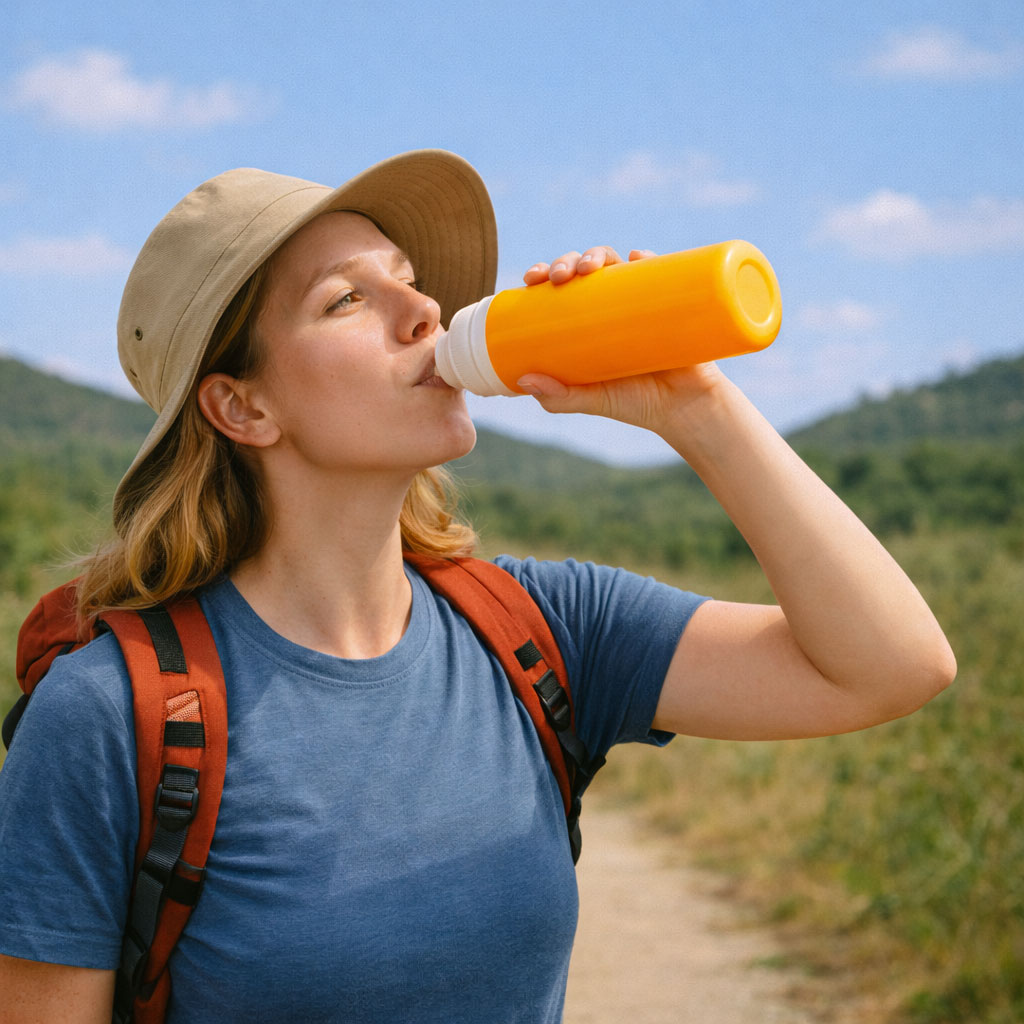
HYDRATION
I recommend taking at least 1 litre of water with you, which you can refill in every village. You need to be prepared to have water for 3-4 hours since the longest stage without a residential area will be 16 km. If your backpack supports it, water bladders or hydra-packs can be a good solution, but make sure the pack will fit your bag. I propose not filling more than 1-1.5 litres in your bag and refilling on the way to have fresh water. Safe water fountains are indicated by ’aqua potable’.
There might be certain stages, especially in less populated areas where you won’t have access to water for a longer time. Here you might need to prepare to have some additional water with you. You can buy a bottle of water in all villages; just make sure to prepare in advance. The principal rule is still to carry as little weight as possible.
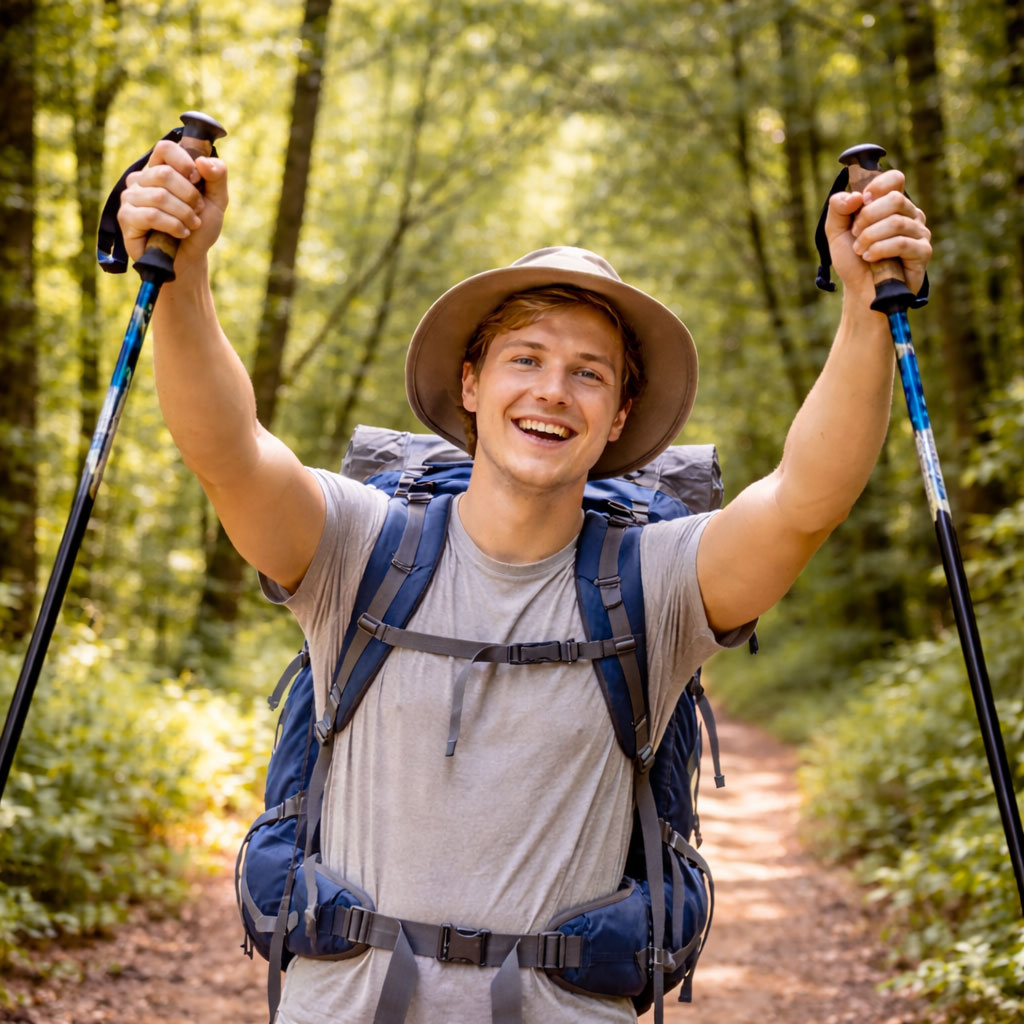
WALKING POLES
Personally, I highly recommend using walking poles on the Camino. They can significantly reduce the strain on your knees and feet while providing better balance.
If you prefer to avoid the hassle of checking bags and your walking poles are not permitted on the plane, you can purchase basic poles in larger cities in Spain.
Look for foldable, lightweight options that are suitable for travelling on planes. I also recommend obtaining protective rubber tips for the ends of your sticks, as you’ll primarily be walking on flat, rough surfaces that can cause vibrations and wear down the tips after a few hundred miles. If the size is not adjustable, make sure to buy one in the proper size.
CLOTHING
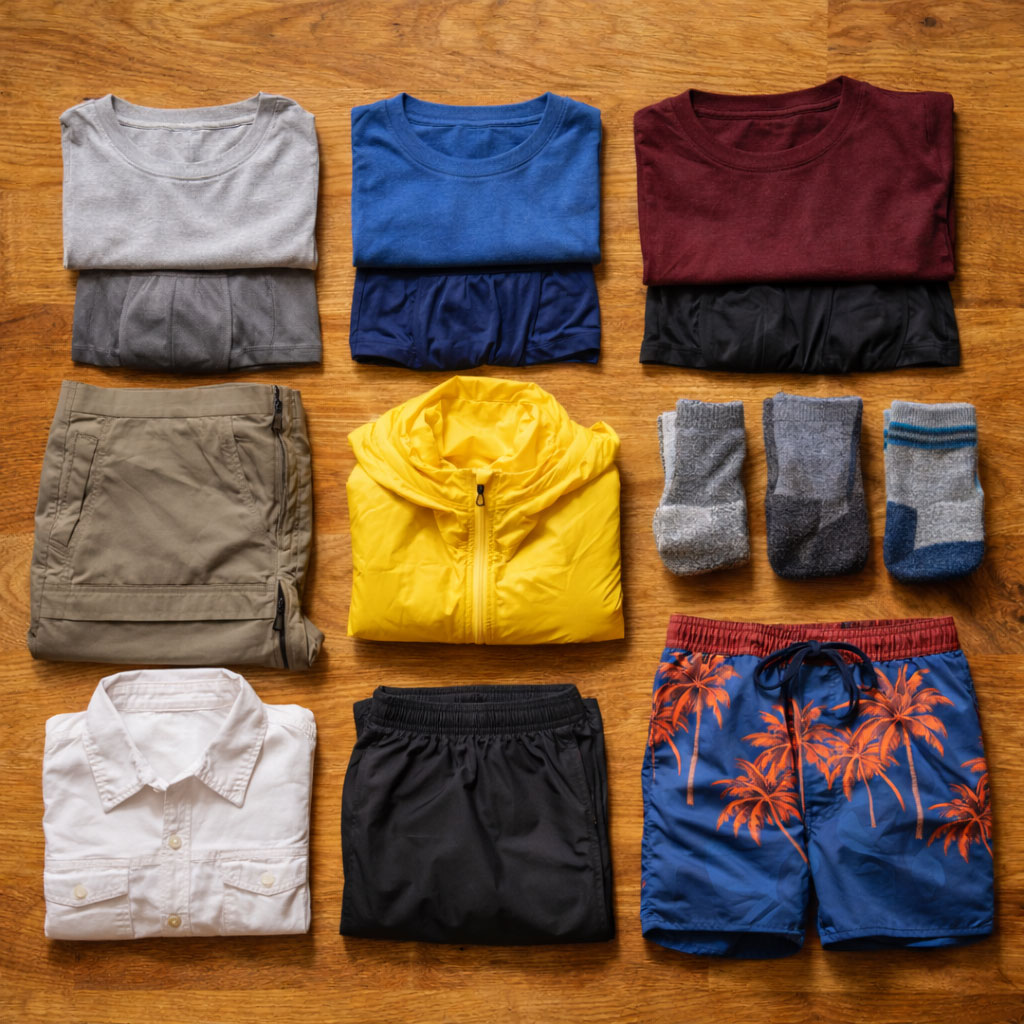
Pack no more than three sets of T-shirts and underwear, in addition to the one you are wearing. This approach allows you to wash your clothes every three days. I opt for ultralight technical T-shirts specifically designed for running or hiking, made from a special material that helps prevent unpleasant odours. Weight is an important consideration!
Zip-off pants are very useful, and I also take a pair of comfortable and lightweight shorts and a white shirt with me that I can wear when I arrive at my daily destination. The white shirt with long sleeves can also be useful to cover your skin when exposed to the sun. I always take a light hoodie or thermo-sweater for the cooler evenings and dawns.
I usually take 4-5 pairs of special Merino hiking socks with me so I can also switch my socks during the day to avoid blisters. Socks will be essential, so take socks that you have already tried out and try not to save money on these. Here is how to avoid blisters.
A useful tip is to pack a basic swimming suit and a swim cap with you. There are many villages and towns with open-air pools, and you will find swimming really recharging after a long day of walking. Most of these places require you to wear caps in the pool.
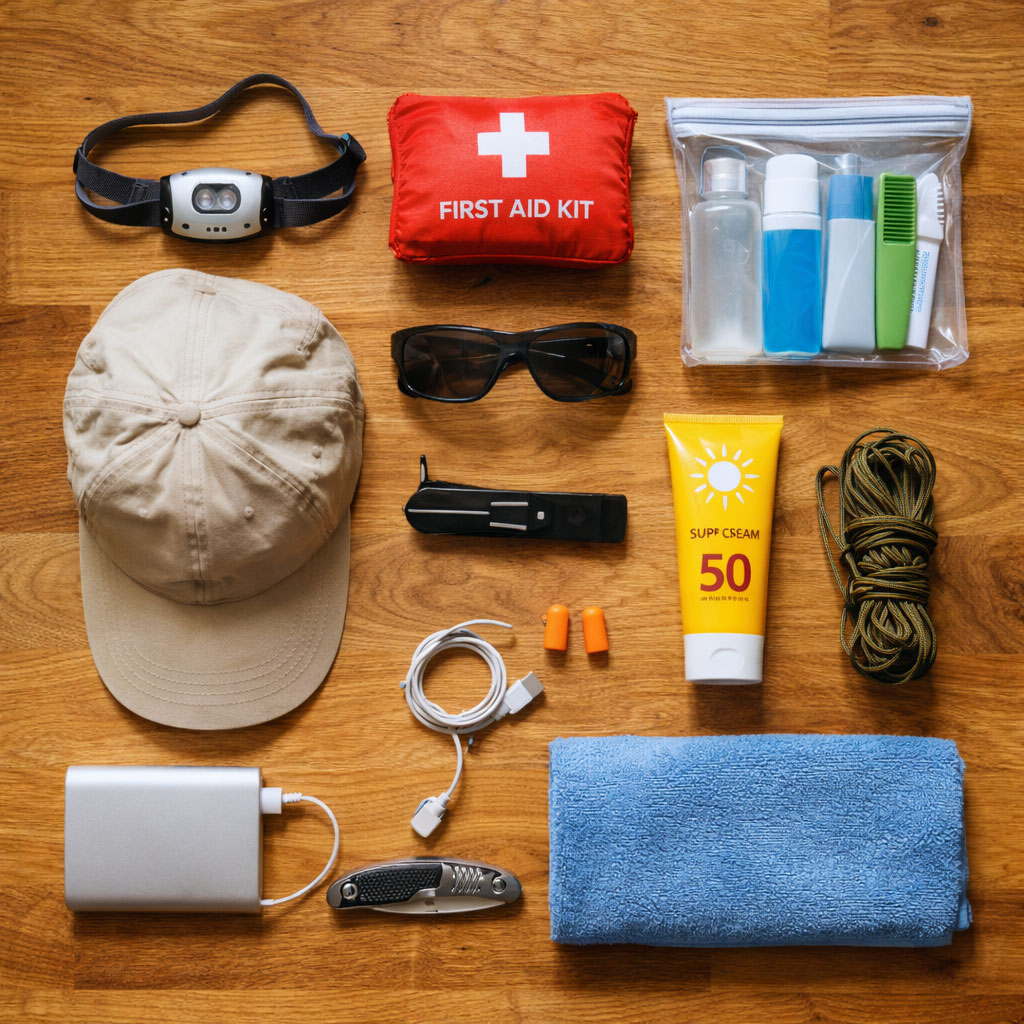
I strongly recommend wearing a baseball cap or any other protective clothing, possibly white or a lighter colour, to protect yourself from the sun. If you have sensitive skin, you can buy caps that can also cover your neck and ears.
It’s a smart thing to pack your clothes in a compression bag to save some space.
FOOTWEAR
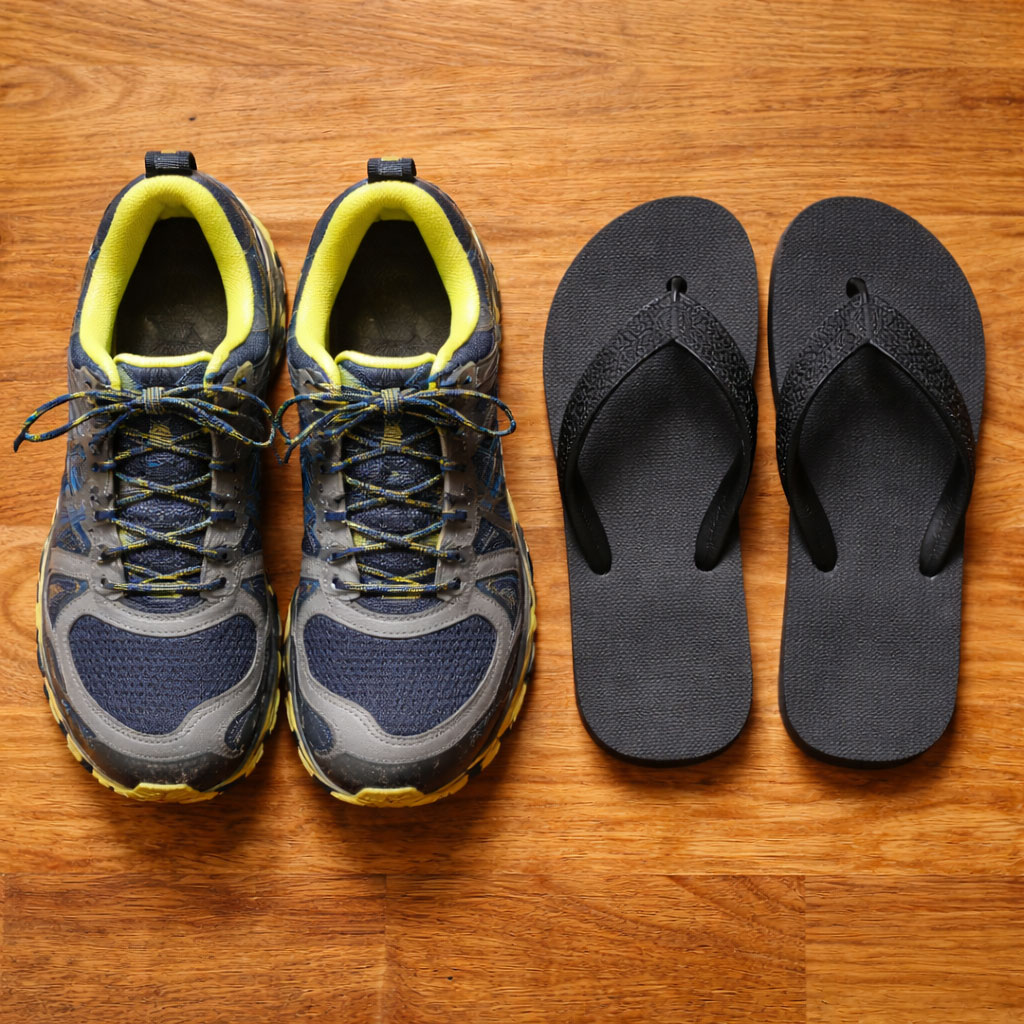
It’s essential to have well-fitting, comfortable shoes that you’ve already tried on. Trail running shoes are ideal for the Camino: they are lightweight and breathable, providing support for your ankles while offering excellent durability. I recommend choosing shoes that are one size larger. Personally, I advise against using large hiking boots, as you won’t be climbing rocks; 95% of the trail consists of flat, hard surfaces.
To rest your feet after you arrive and to take a shower, you can bring flip-flops or light sandals with you. I can suggest two ultralight spare sandals that aren’t for walking but are good for resting your feet when you arrive. In my experience, no additional footwear and spare walking shoes will be needed but, pay attention that your walking shoes are in a satisfactory condition; otherwise, you might need to buy a new pair along the way.
OTHERS
Especially when arriving in Galicia, you can expect to have some rain even in the summer months. If you are walking in spring or autumn, you are more likely to run into some thunderstorms. Personally, I always take a lightweight umbrella designed for hiking and a light rain jacket with me, but some pilgrims prefer bigger ponchos. If your poncho doesn’t cover your backpack, don’t forget to bring a separate rain cover for your bag if it’s not included in it. You might want to keep your pilgrim passport and your documents safe and dry. You can use a zip-bag or a special document holder for this.
In your first aid kit, you shall have some bandages, sterile gauze pads, a steriliser, hand plasters, and basic medicines such as ibuprofen, aspirin, and tablets against indigestion. Voltaren or other gels can really come in handy when you walk a lot. Don’t take too many of these, because there are several pharmacies along the way. Some people are satisfied with blister pads; I personally don’t use them.
In your hygiene pack, you can take soap, shower gel, a toothbrush and toothpaste with you, and also some Q-tips and deodorant. A mini-size set of each can be bought in your local drugstore.
You can buy lightweight and fast-drying towels at most of the hiking stores. Usually, I take a medium size.
Most kitchens are well-equipped along the Camino, but you might consider taking a folding knife with you. I use a mini folding knife that I can carry in the cabin bag of the plane (with a blade less than 6 cm long) and that also has scissors. You won’t need any cutlery or kitchen tools. The places you will stay will be well equipped.
I take a power bank with me that can fully charge my phone one time. Don’t forget about all the cables that you will need. I don’t recommend buying a high-capacity charger because the weight exponentially increases with the capacity.
I usually take 3 metres of light paracord (3 mm diameter) that I can use to fix things or attach to my bag. It can come in handy as a substitute shoelace too. If you take some quick tape with you, these can also be used to fix some problems (torn raingear, shoes or bags). Don’t take a whole roll; 40-50 cm is enough that you can tape it on your water bottle, so it’s not taking up any space. Needle and thread will come in handy not only if you need to sew your clothes, but also for treating blisters.
Headlamps are more practical than flashlights because you can use your hands while still seeing what you do. Your fellow pilgrims will appreciate it if your lamp has both white and red colours; you can use the red light when preparing for your early departure. I recommend avoiding the expensive headlamps with high-capacity and long-lasting batteries. Normally you will use your lights a few minutes or hours each morning.
Earplugs can significantly enhance your nights, especially when you encounter snoring pilgrims in the albergue. (You will.) I suggest investing in a higher-quality product instead of opting for very cheap ones that may fall out of your ears during the night.
Contact me if you need help checking your gear
or a recommendation on what to buy.