
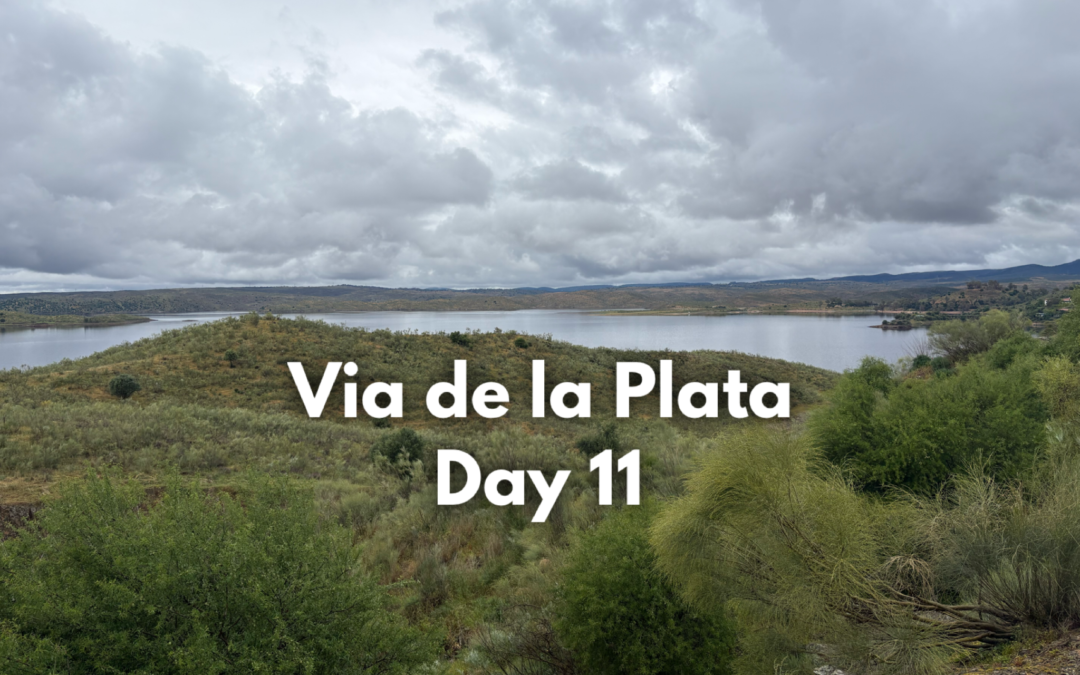
When I woke up, it was still raining. Since the journey will be a longer day, I already packed my bag when I went to sleep. I was planning to reach the first town, about 10 km from Cáceres, and have a hearty breakfast there.
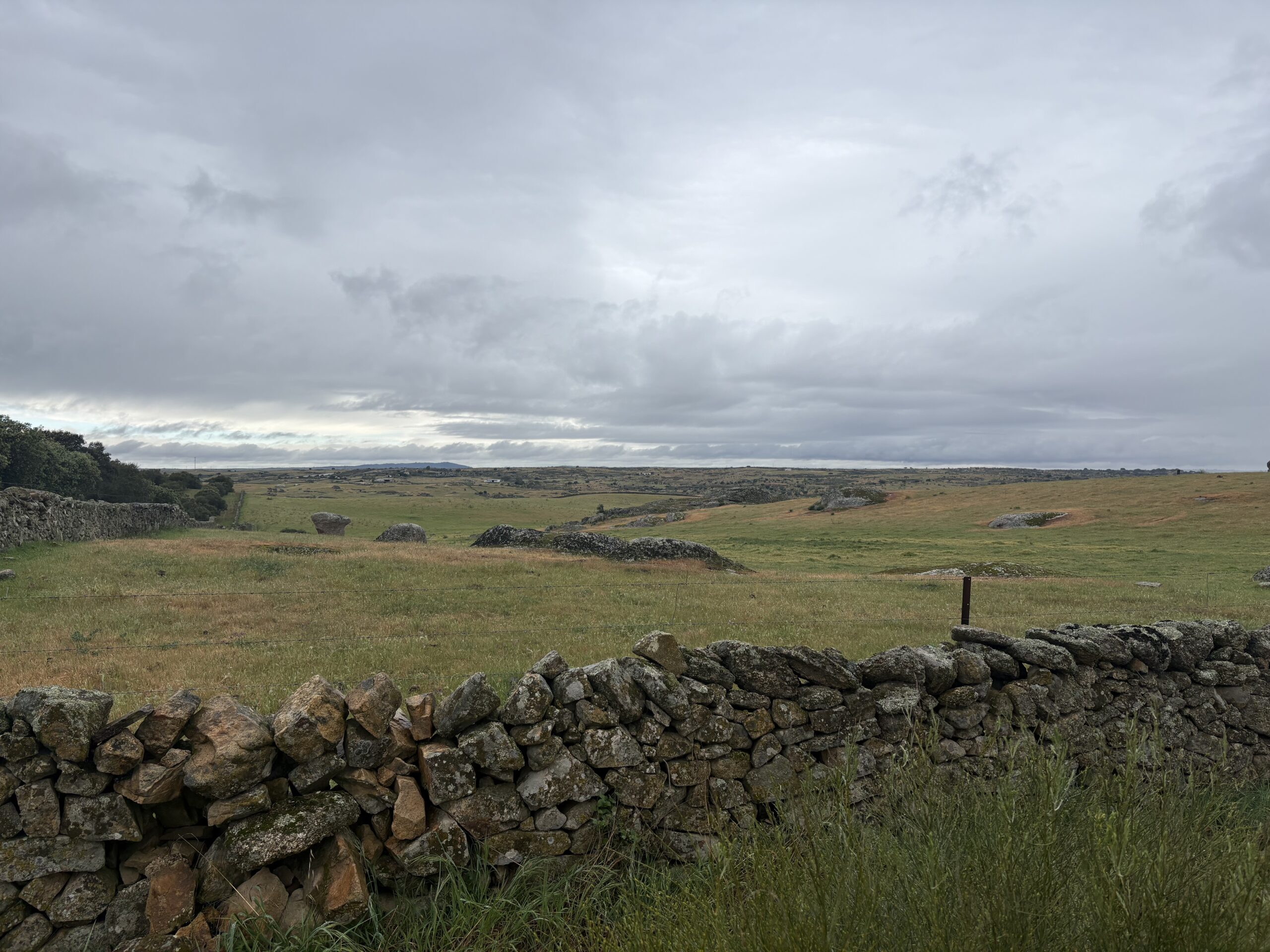
The trail to Casar de Cáceres was lovely. From the top of the hill I had an excellent view of the plain ahead of me and some mountains in the background.
Descending from the hill, I saw the French older man again. He stopped before Cáceres and walked to the next village, so he walks only about 20 km today.
I had a rich breakfast at around 11:00 and continued my way. Leaving Casar de Cáceres, it started to rain constantly for about 2 hours with varying intensity. This was the first time I also had to open my umbrella.
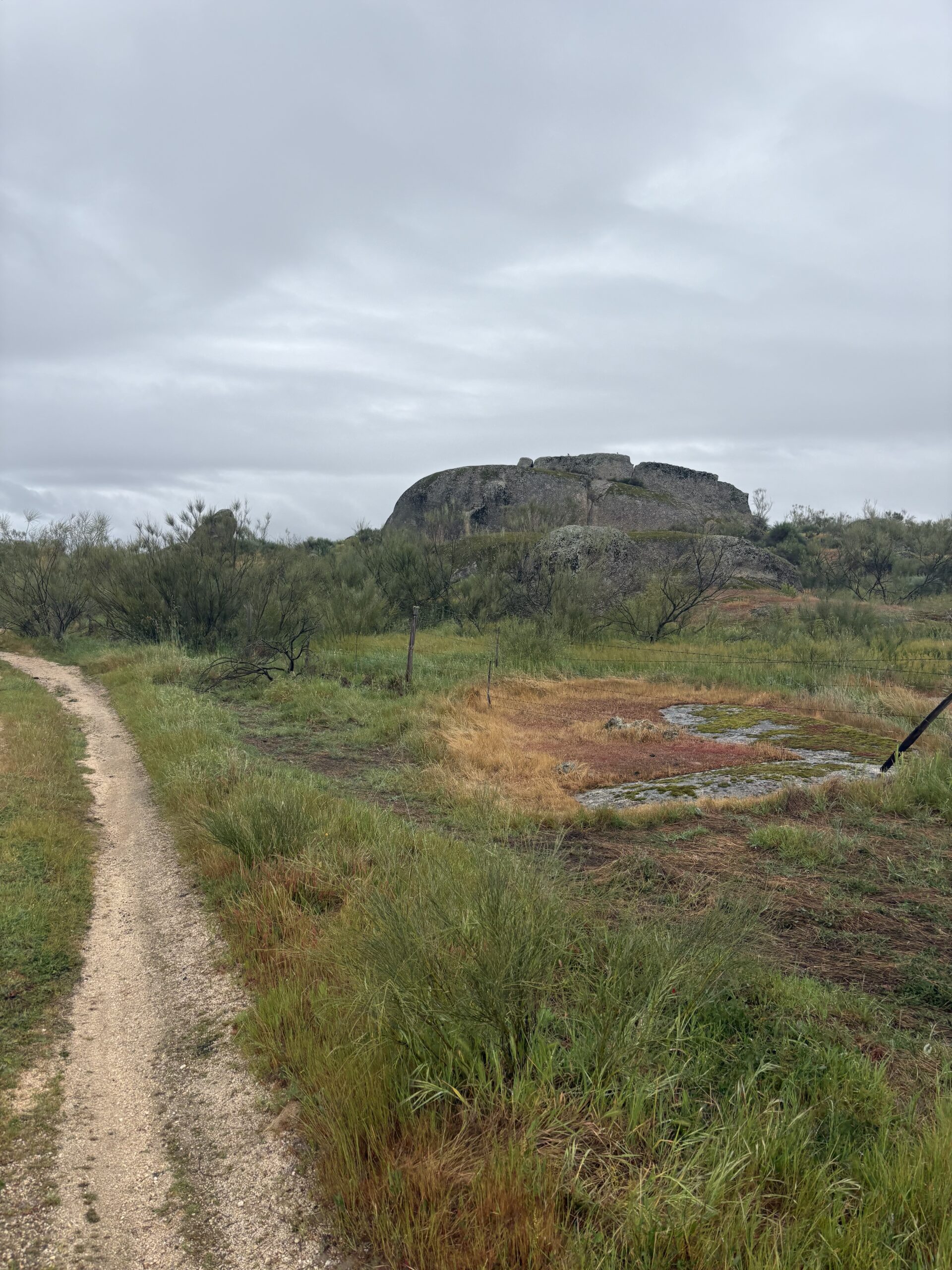
The route led through farm lands, hunting areas and pastures. I have seen mostly sheep and cows around; some dogs were barking at me. Otherwise, the area is rather deserted.
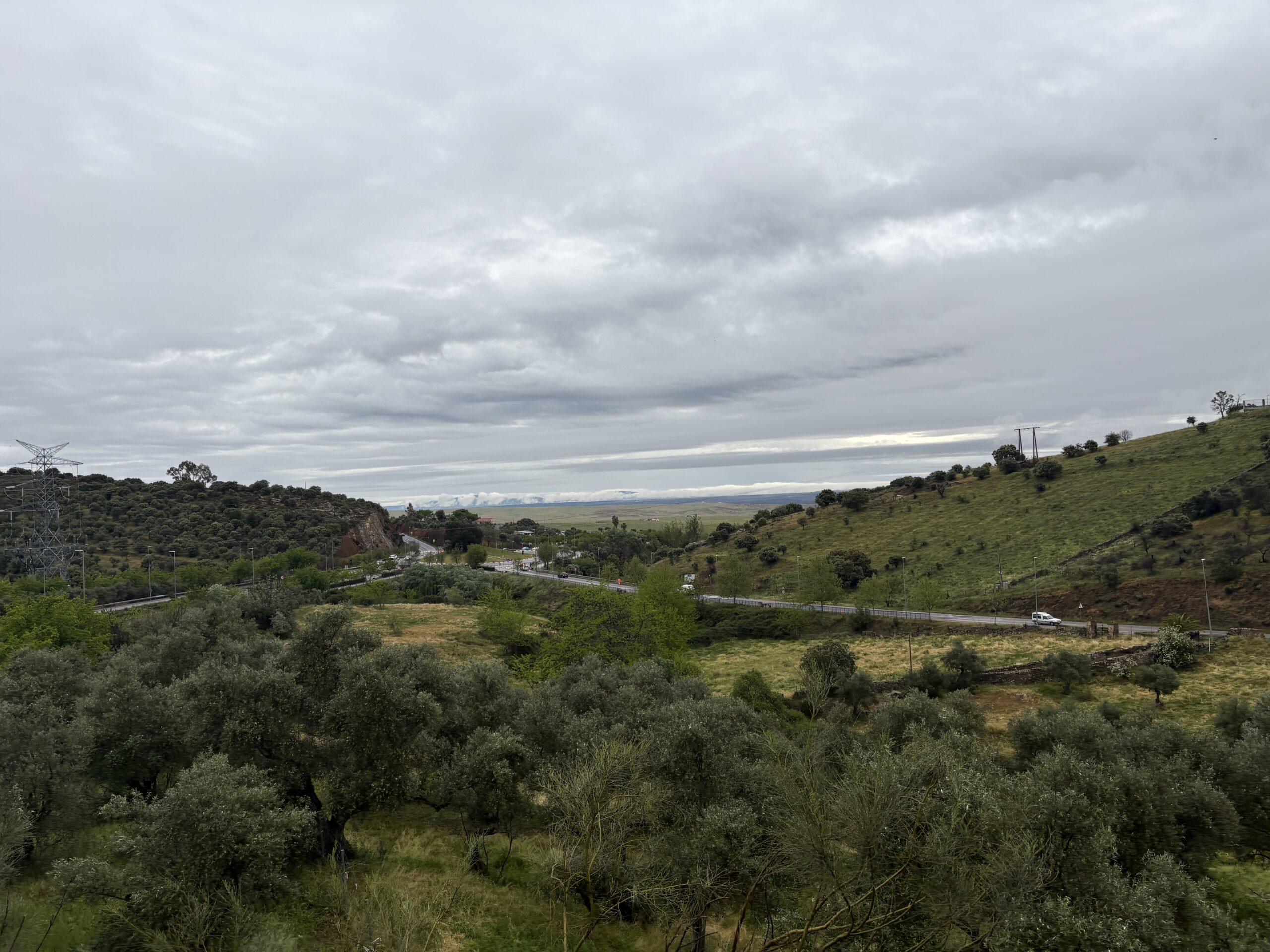
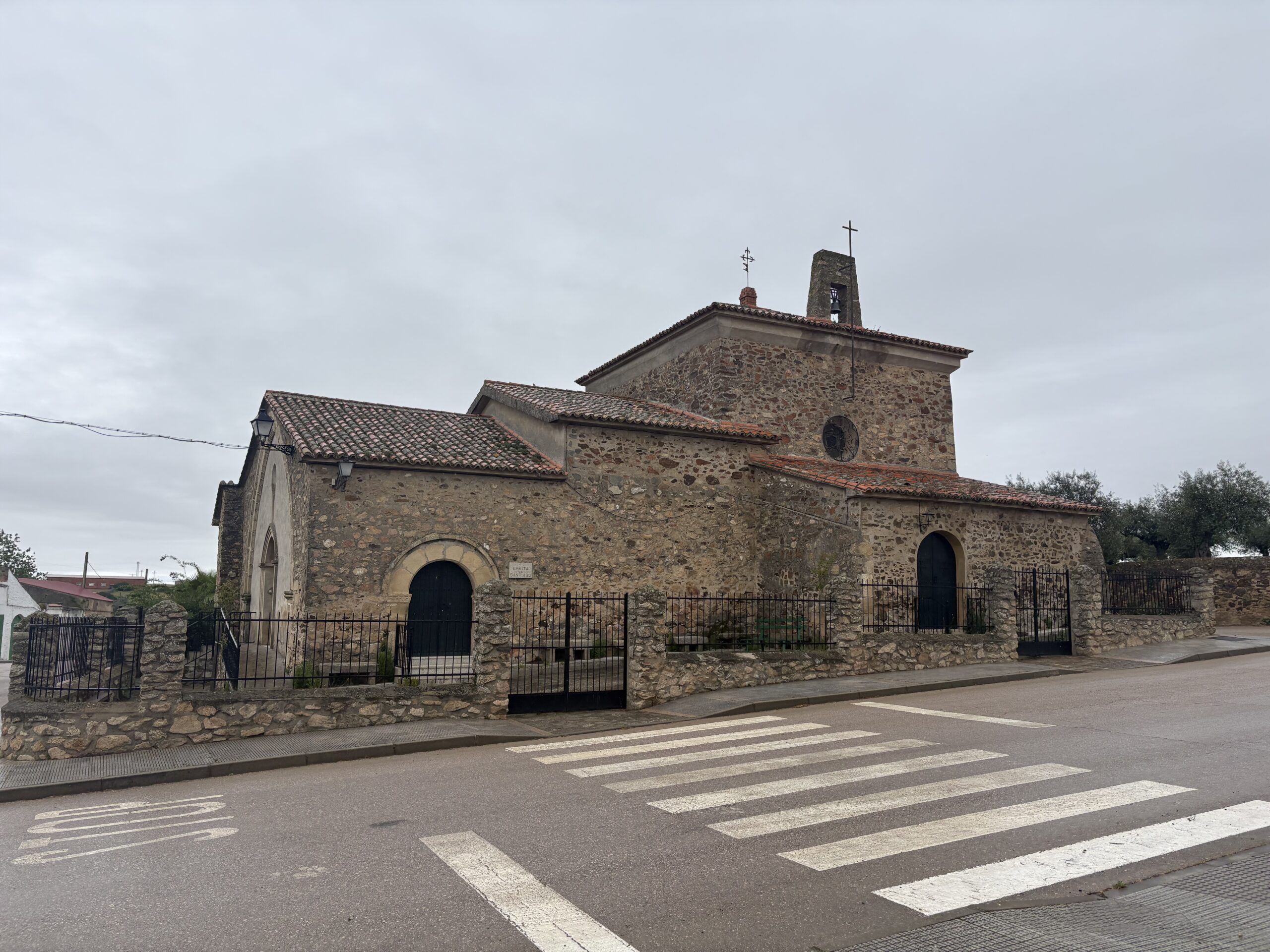
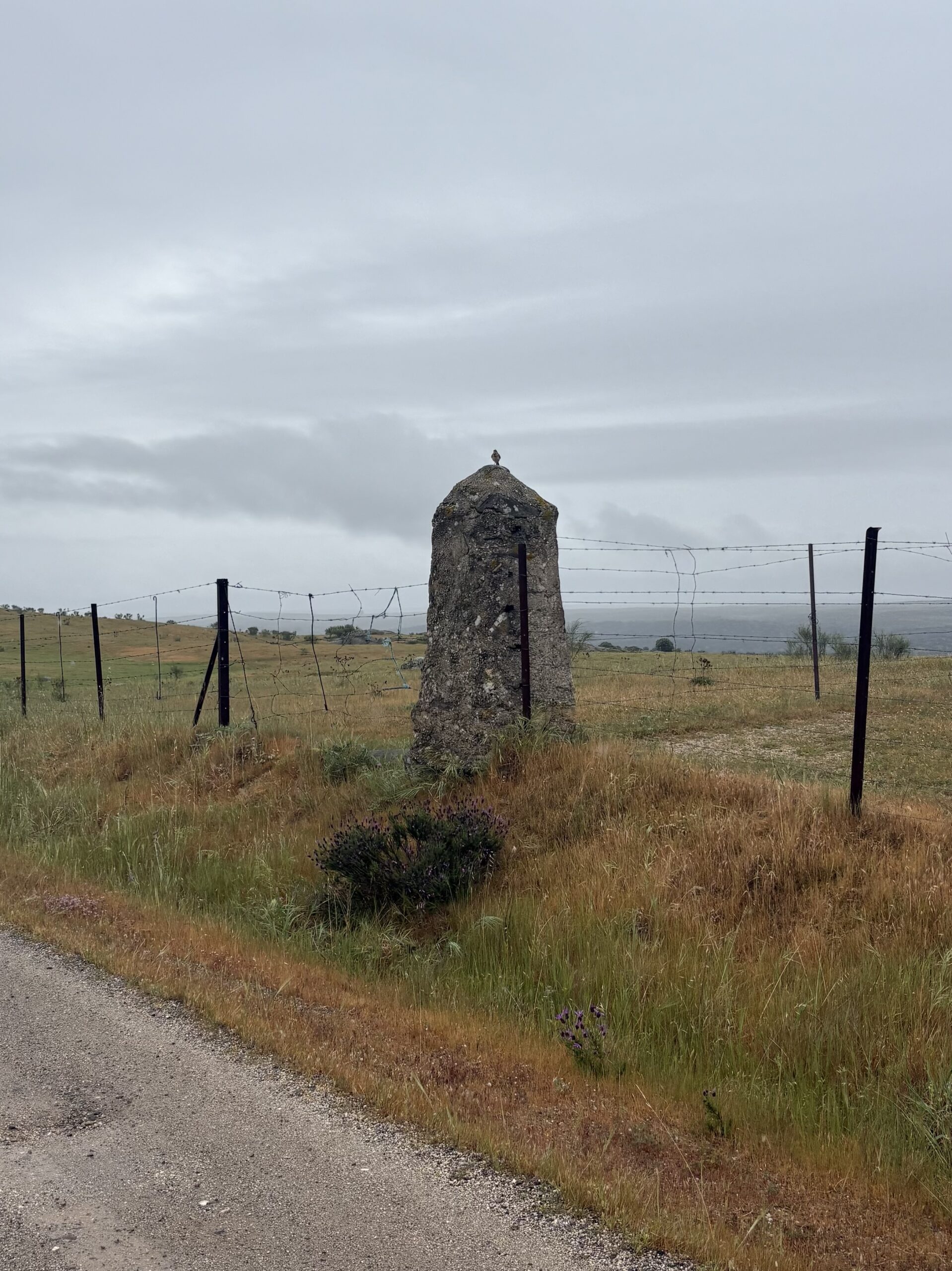
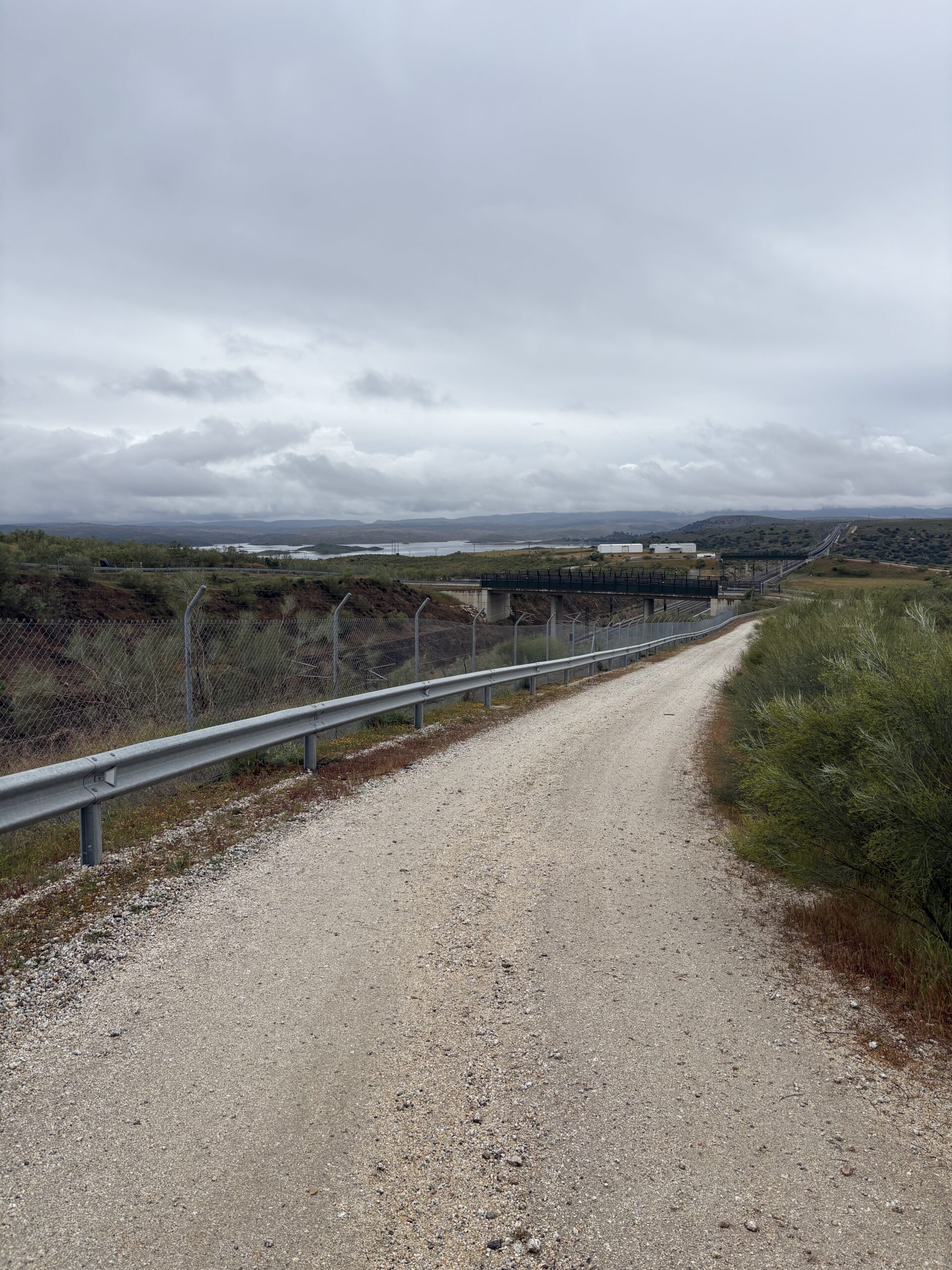
By 14:00, I reached the high-speed railway after crossing through the hills. The trail, as well as a path for animals, crossed the tracks through a bridge. Spain is renowned for the well-developed high-speed rail system. The average speed of the trains in Spain is close to 200 km/h. There are no railroad crossings; the tracks are protected by fences and cameras.
I met a “new” pilgrim, a young Austrian man who lives in Prague. He was setting up his camping stove to heat a can of food. I asked if he was doing wild camping, and he confirmed, although the weather was rather cold and repeatedly started to rain. Apparently, from now on, everyone will be new, as I am walking longer distances than the average pilgrim to reach my destination – Aldeanueva del Camino – on time.
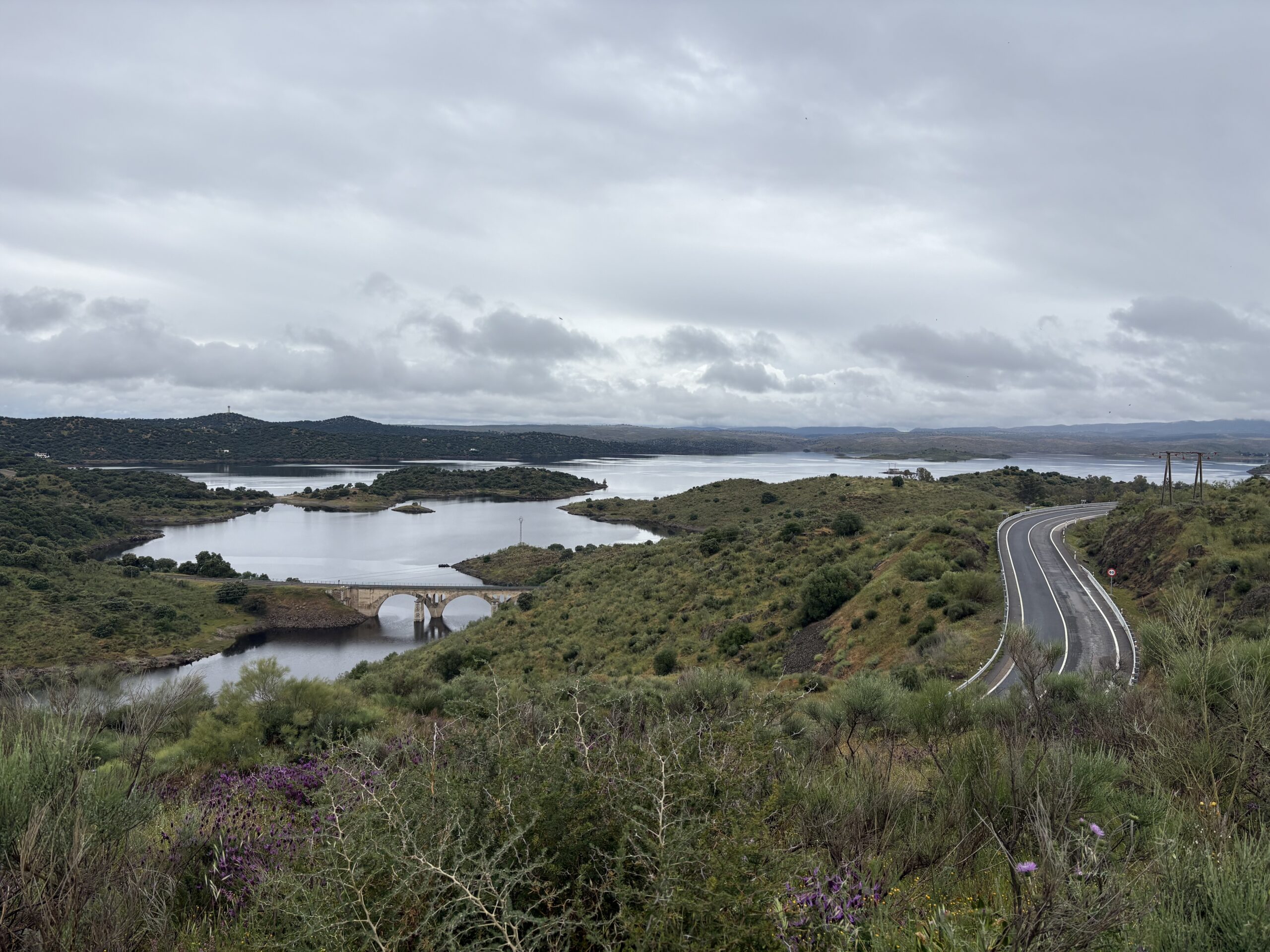
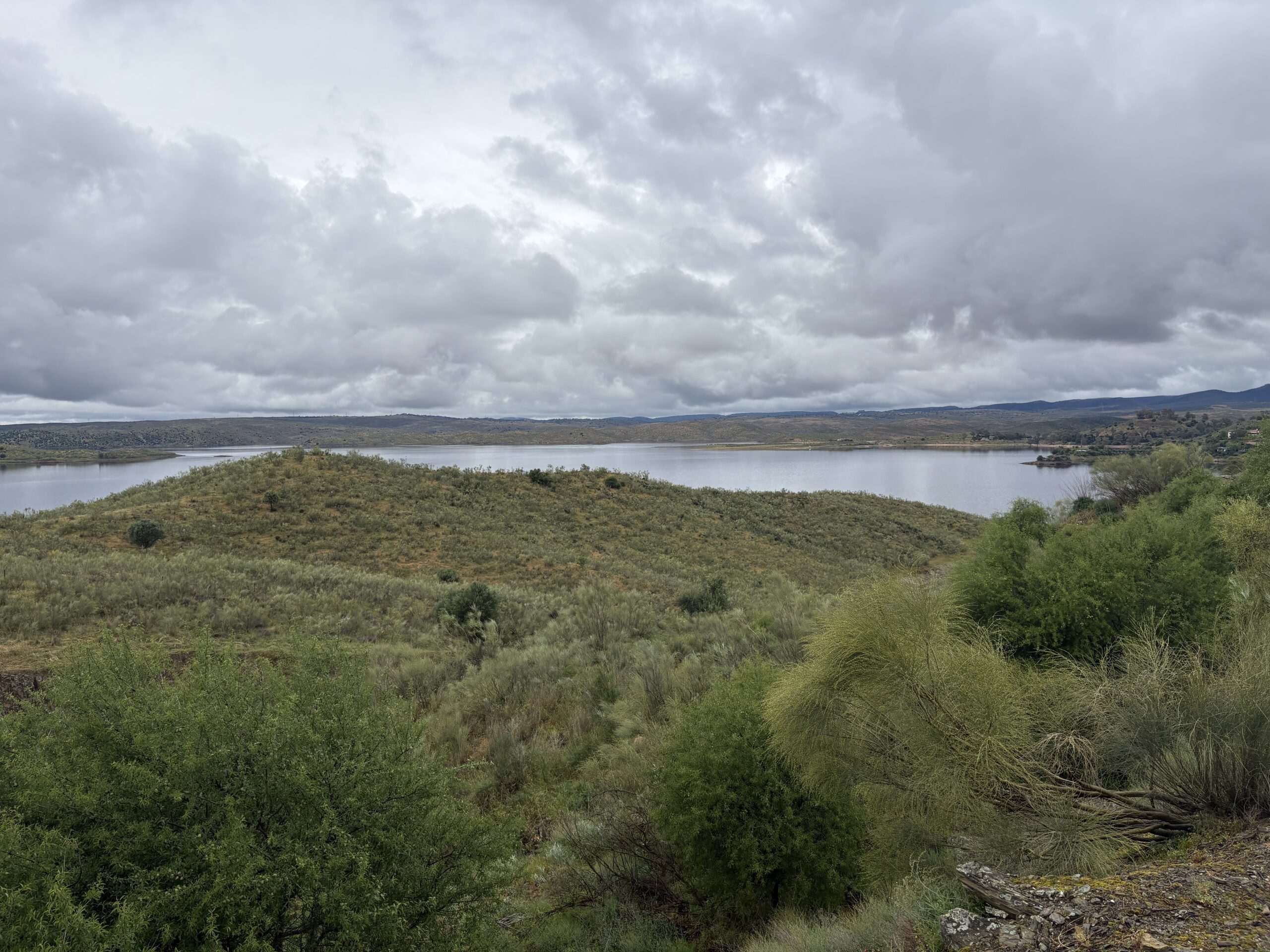
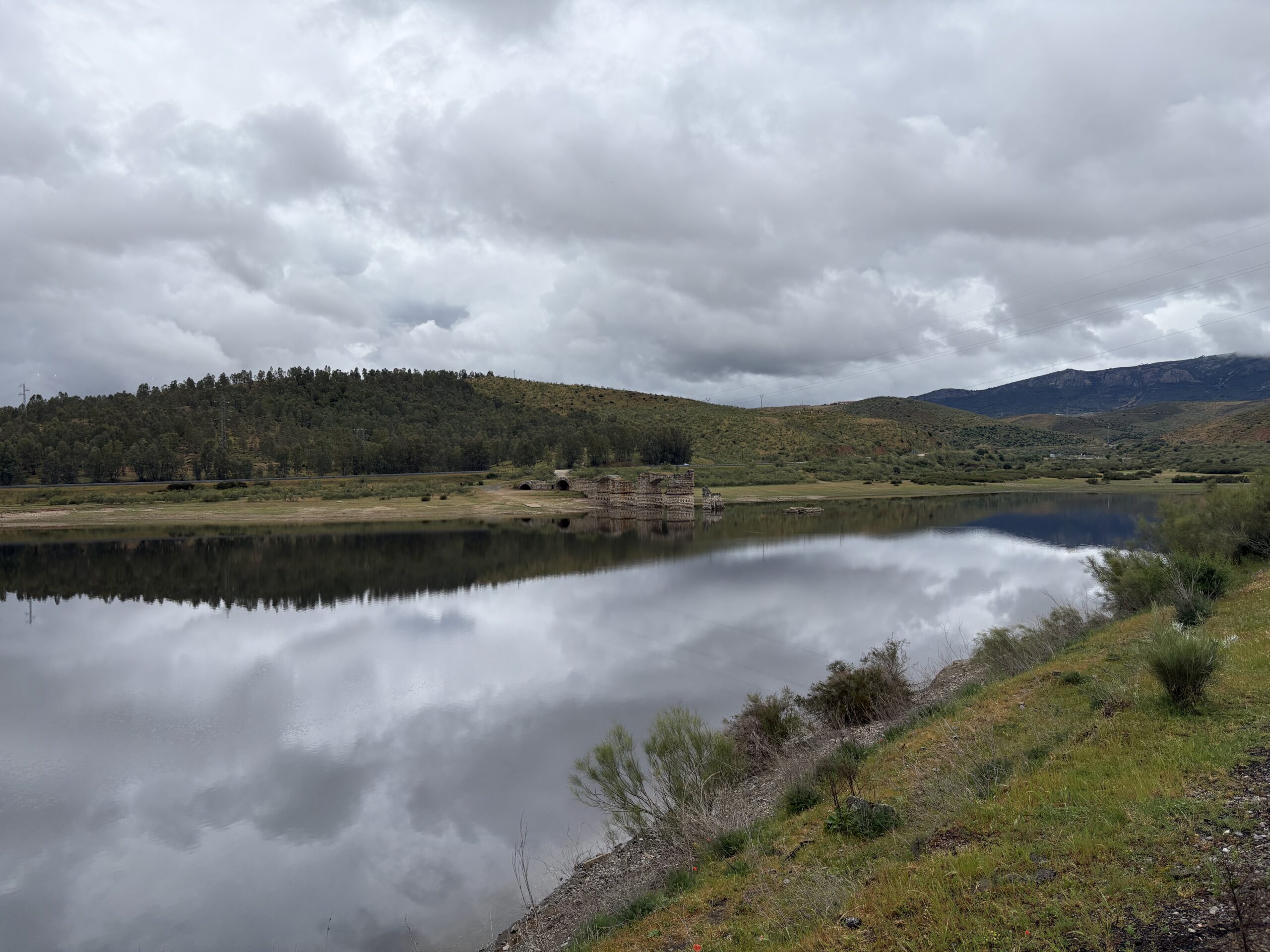
The view from up was spectacular over the reservoirs created along the Tajo River. The trail descended to a road shortly before the bridge over the river. The Tajo is the longest river in the Iberian Peninsula, approximately 1,007 km long; it originates in the mountains of eastern Spain in the Sierra de Albarracín and flows west across Spain, then forms part of the border with Portugal and empties into the Atlantic Ocean at Lisbon.
The only uncomfortable experience was that I had to walk beside the road. Usually, there is enough space on the side of the road, so it’s quite safe to walk along roads, but every time the road crosses the bridge, I have to climb over the guardrails. Trust me, after walking over 30 km, you don’t fancy these acrobatic movements.
After walking 35 kilometres, I had to make a decision. The Camino trail diverged to the right and ascended again, creating a significant detour around a hill, while I could also choose to stay on the main road, which would save a few hundred metres and definitely several minutes. However, walking on asphalt is something that one should avoid. It was already 16:30, and the albergue staff were texting me about my arrival time, so I decided to follow the main road. I arrived at the albergue by 17:45, my feet exhausted.
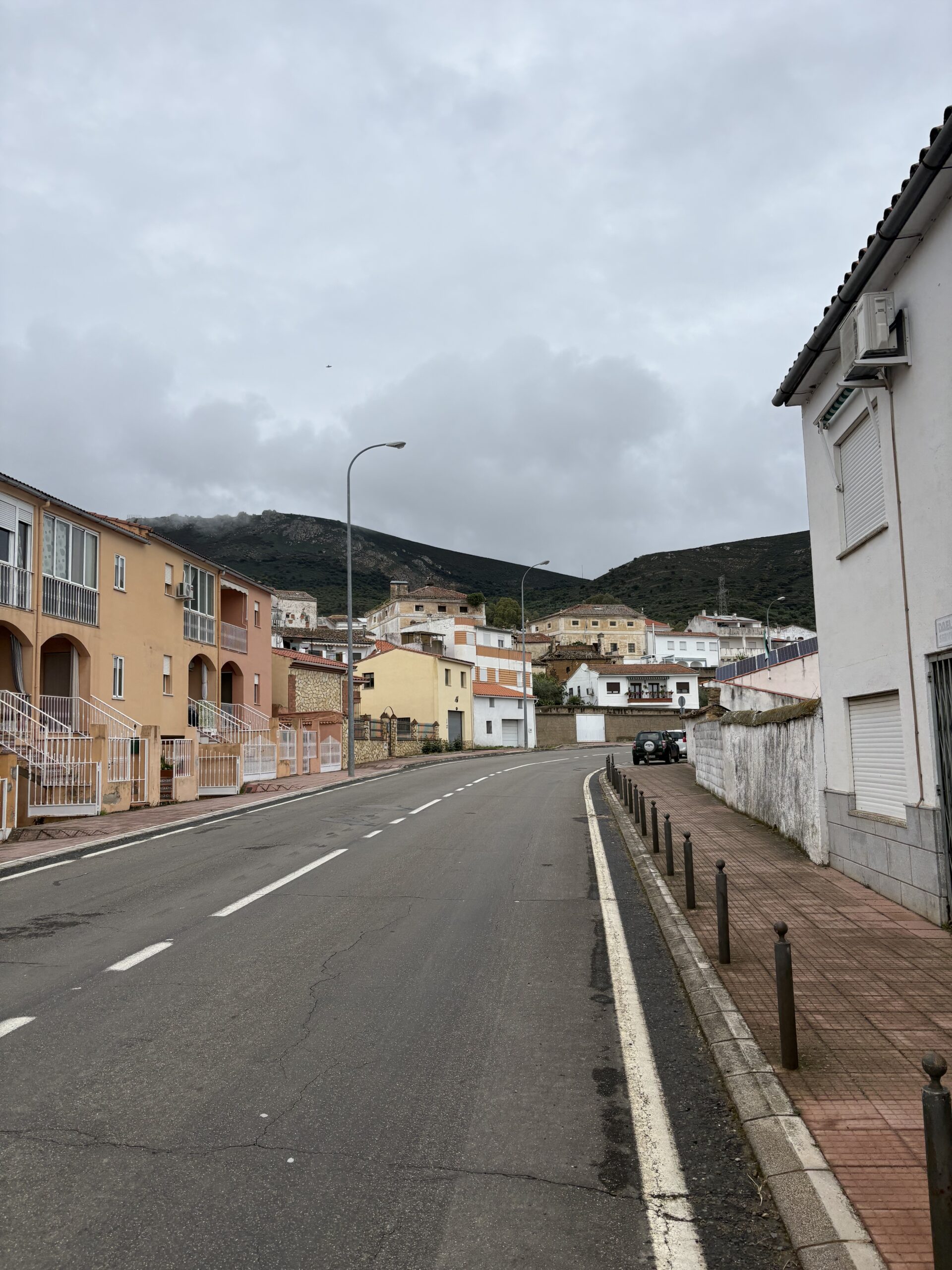
After a well-deserved shower, I set my bed, unpacked my rucksack and enquired about dinner options. They informed me that I must wait until 20:00 for dinner at a nearby restaurant. I couldn’t take it that long without eating, so I looked for a pub in the town. Sometimes they also serve some basic menu. It was a real local pub. 95% of the guests are men, all of them playing a card game or dominoes. Unlike a typical Hungarian village pub, none of the guests are drunk. Lacking a better option, I ate two bags of chips.
The pilgrim menu was really worth trying. The restaurant is only open between 11:00-16:00 and 20:00-22:00. It’s a rather small village. It seems mostly pilgrims eat here.
Daily spending:
€15.30 – lunch
€12 – refreshments, coffee
€23 – dinner
€19.55 – accommodation