
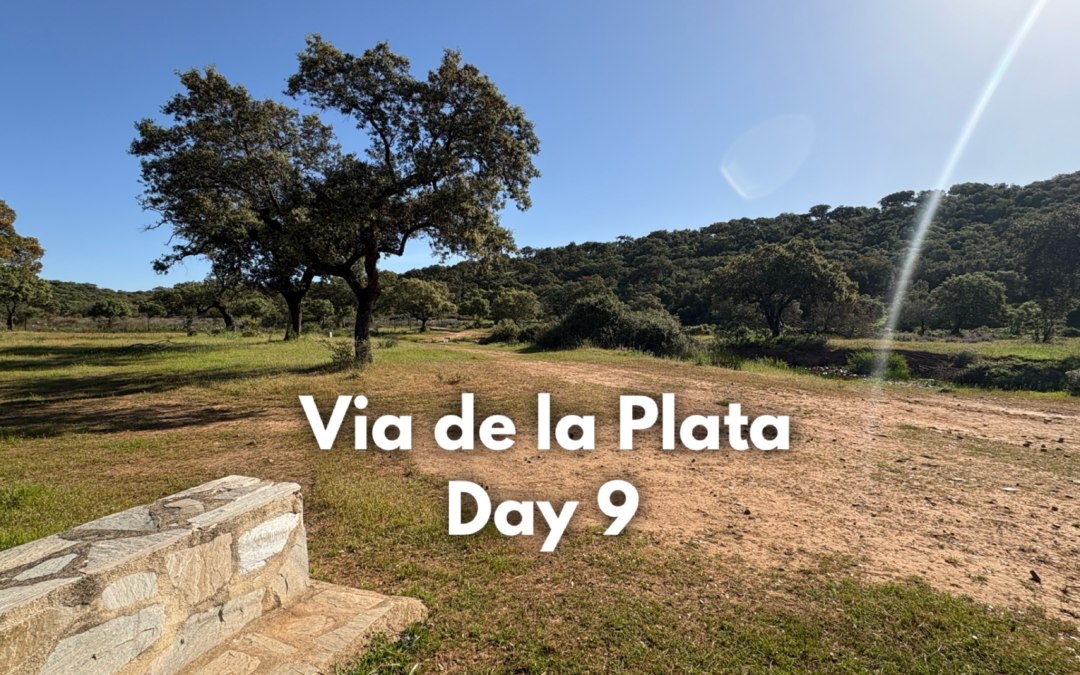
I had a restful sleep. Surprisingly, my French roommate was not snoring at all. By the time I got up at 08:00, he was gone. The restaurant was still closed when I left, so no breakfast today. The weather is a bit cooler than yesterday, but the sky is clear.
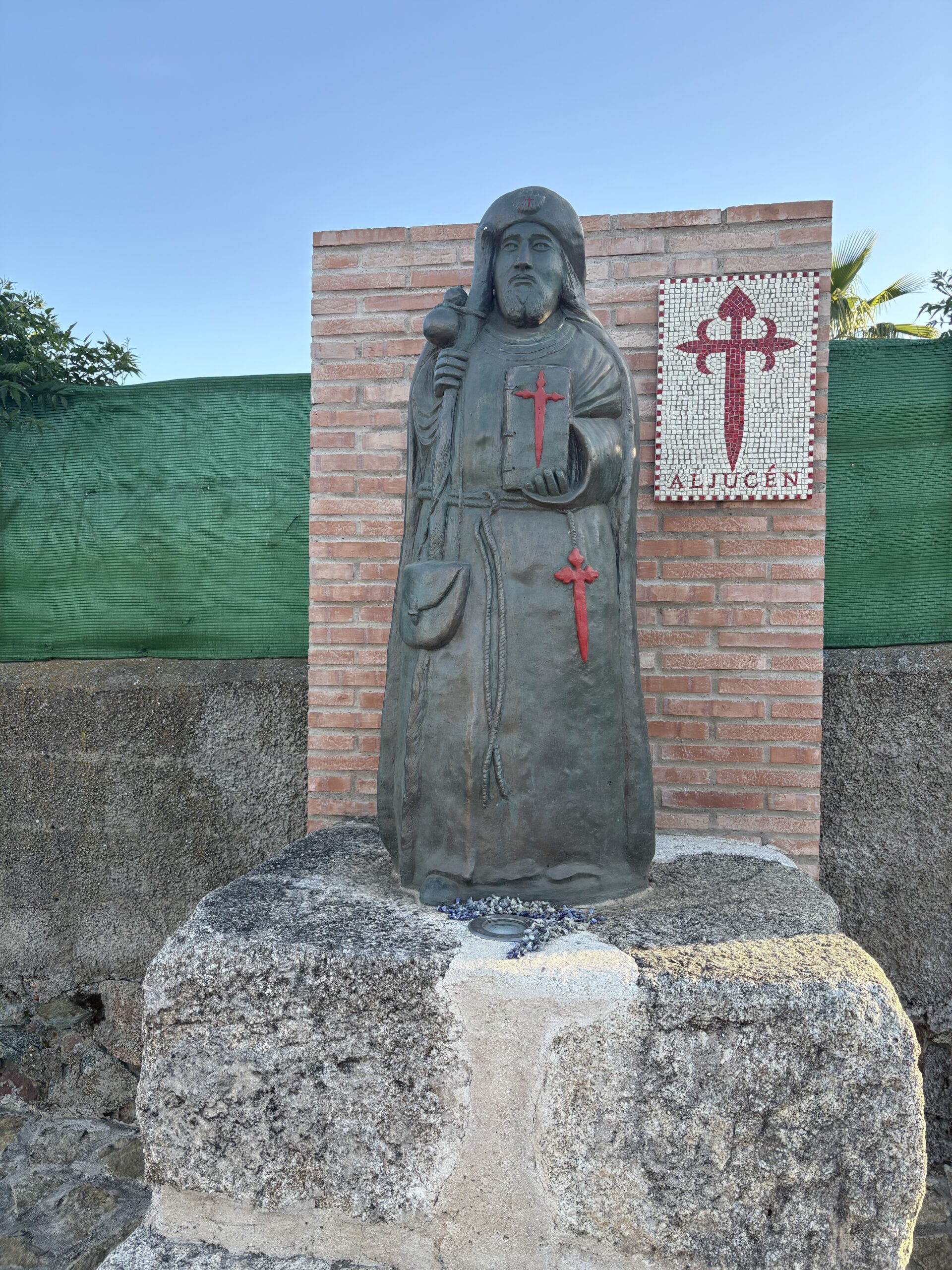
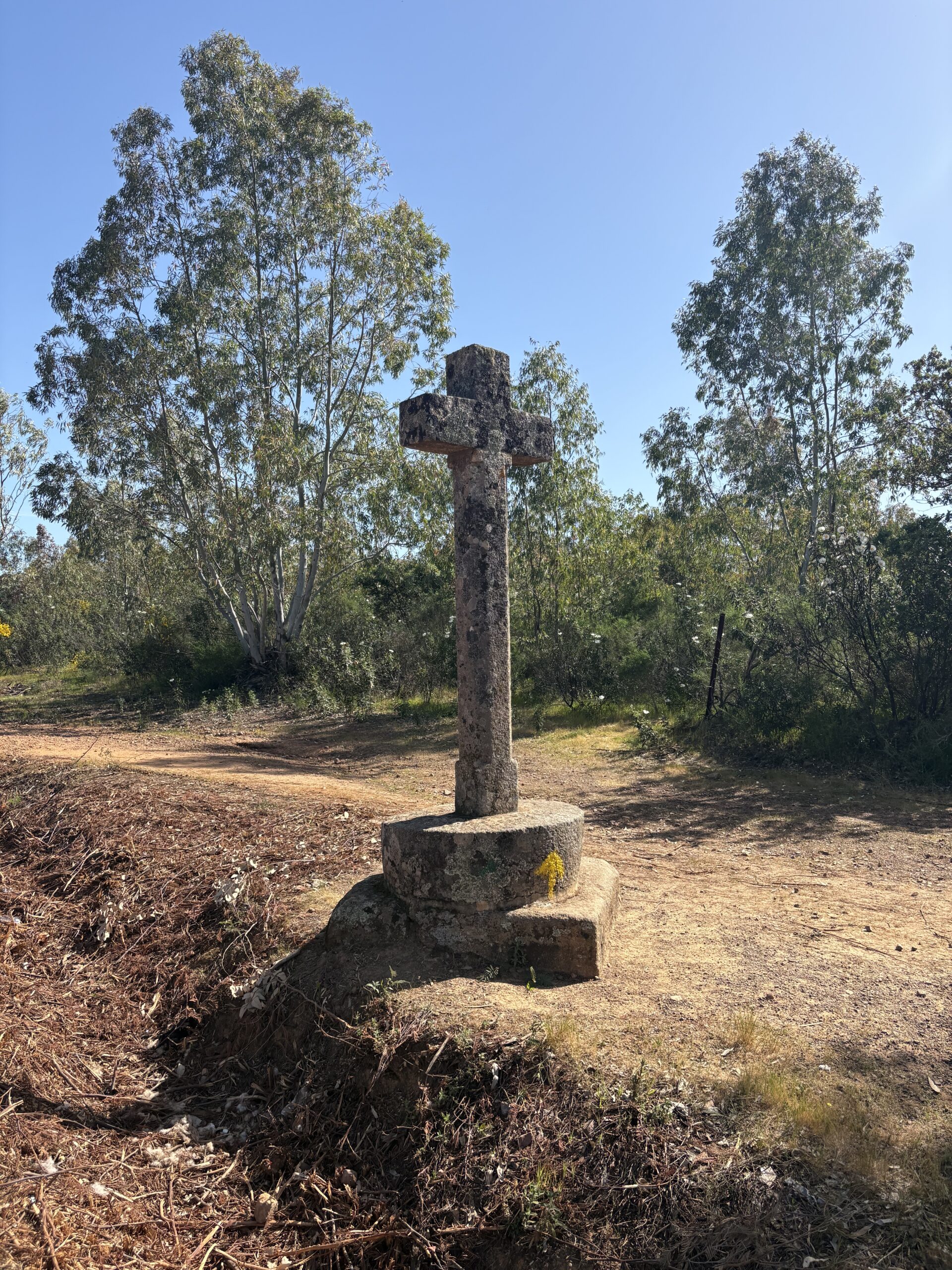
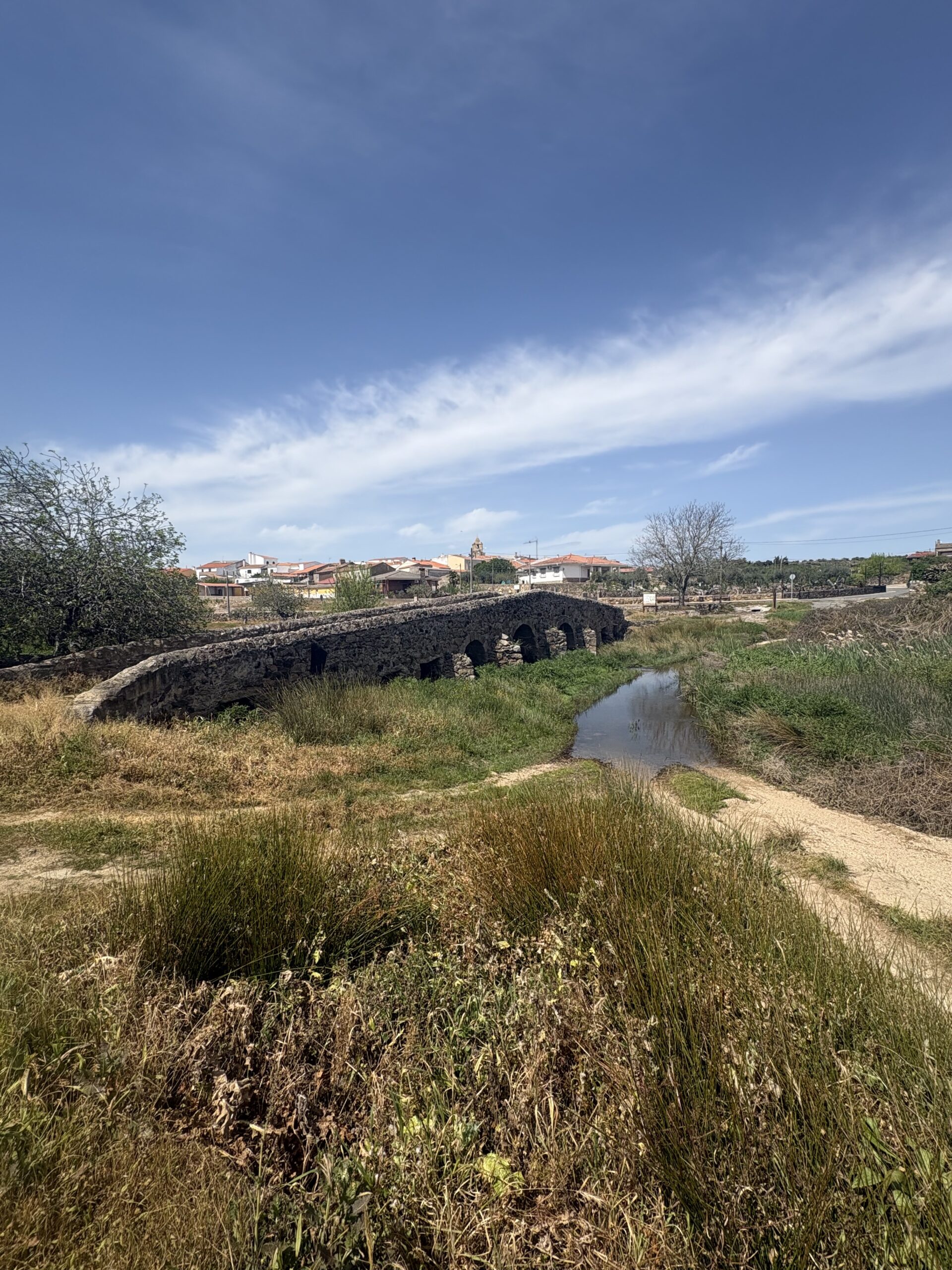
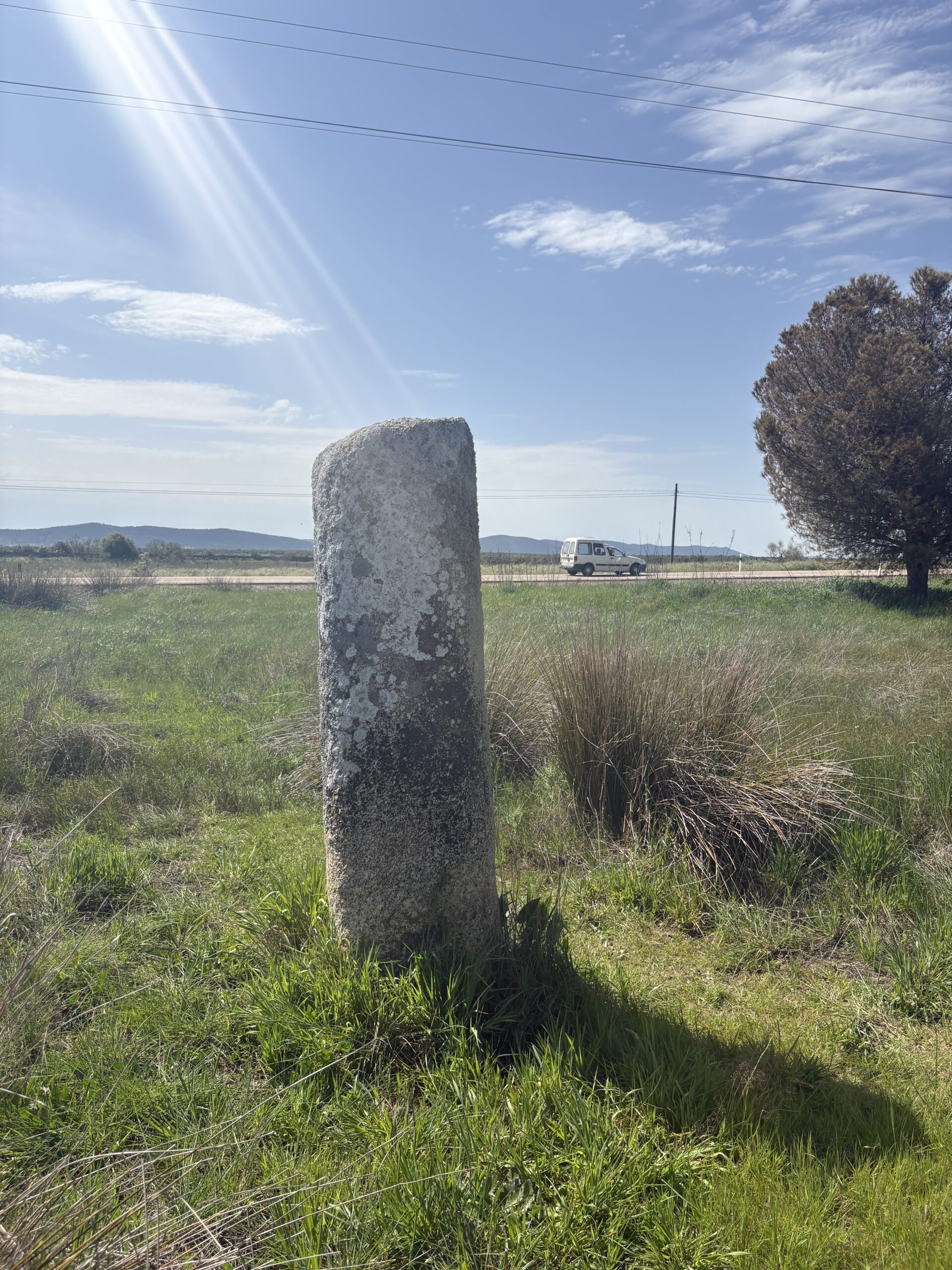
Beyond Aljucén, the walking became quieter. The trees are more dense, but still not high enough to provide shade. This part of the stage was somewhat hilly. I passed by the Puente de Trajano, a modest yet evocative Roman bridge that reinforced the historical continuity of the route. I met one of the many Dutch pilgrims I encountered during my Camino, an older man from the eastern part of the Netherlands. The final stretch to Alcuéscar was long and open, with rolling terrain and limited shade. Cruz de San Juan signalled our approach to the village. He decided to take a rest here, while I continued walking. I have done 22 km so far.
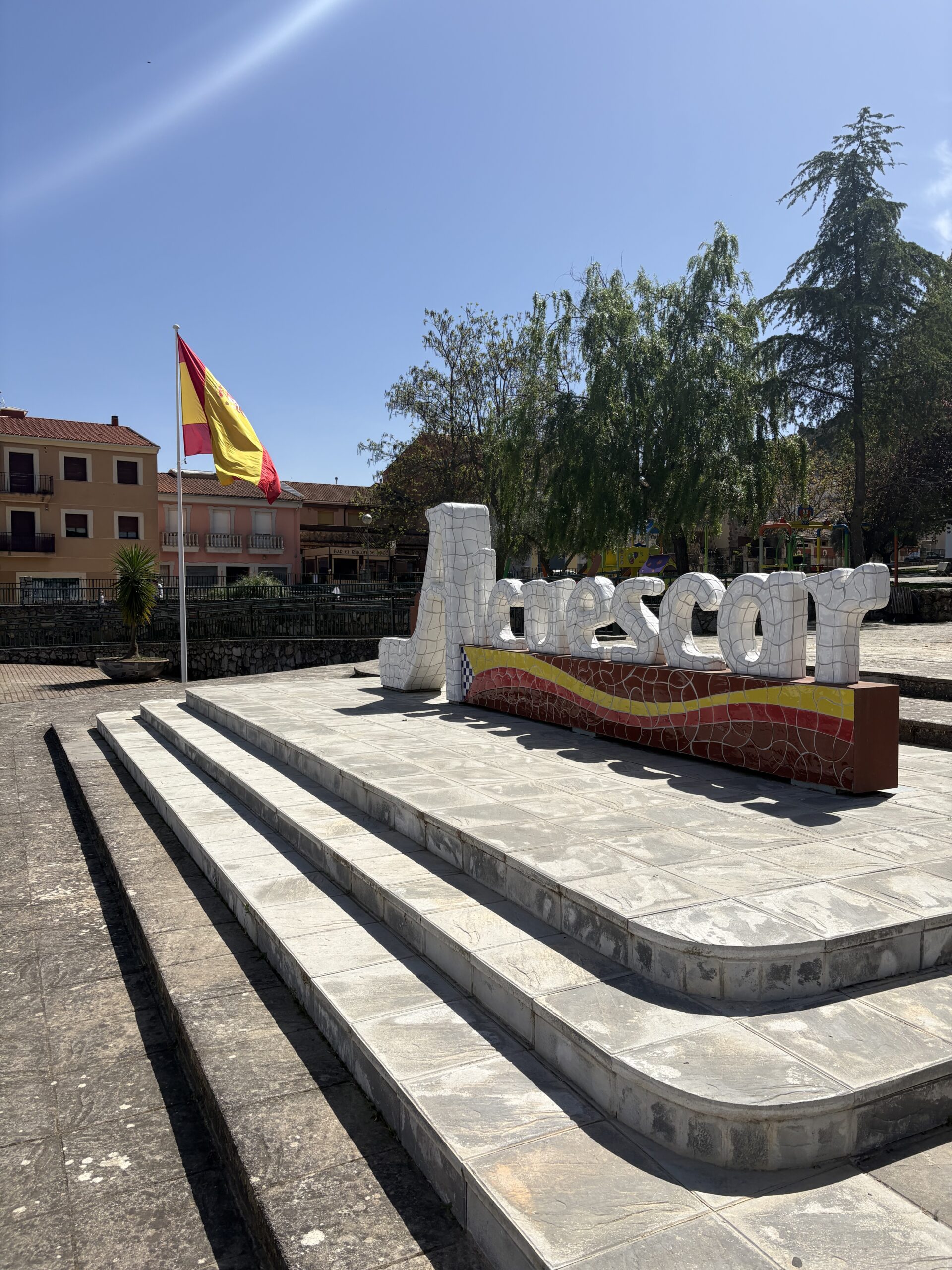
I arrived in Alcuéscar shortly before 13:00 and was immediately looking for a restaurant or bar. I found one, and a lady who was just opening to clean up told me today everything is closed in the village because yesterday was a long celebration of Easter. I was desperately hungry, and at least she offered me a coke and a coffee. Later, a man came out to the terrace, a cook or maybe the boss, and told me that he can make some croquetas for me. I accepted with pleasure.
This made me decide that I will continue for another 15 km today. Now that I had a satisfying lunch, I can manage to walk for another 3 hours.
This is one of the disadvantages of the Vía de la Plata, which I was only partly prepared for: the lack of service along the road. Restaurants, cafeterias, and bars are few; villages can be very far from each other, and the albergues are also small. March-April is the most popular time of the year, and I struggled with accommodation throughout these two weeks.
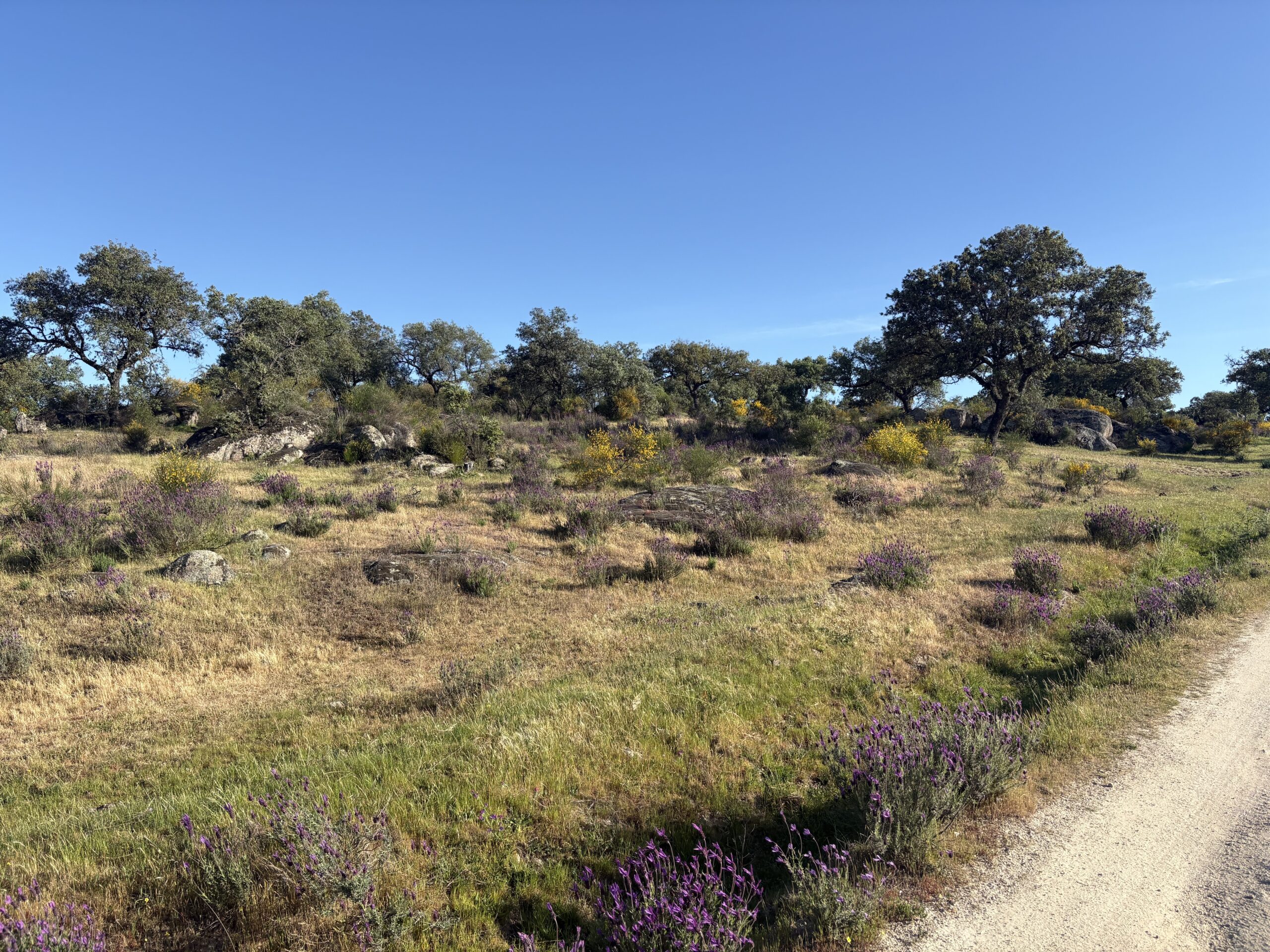
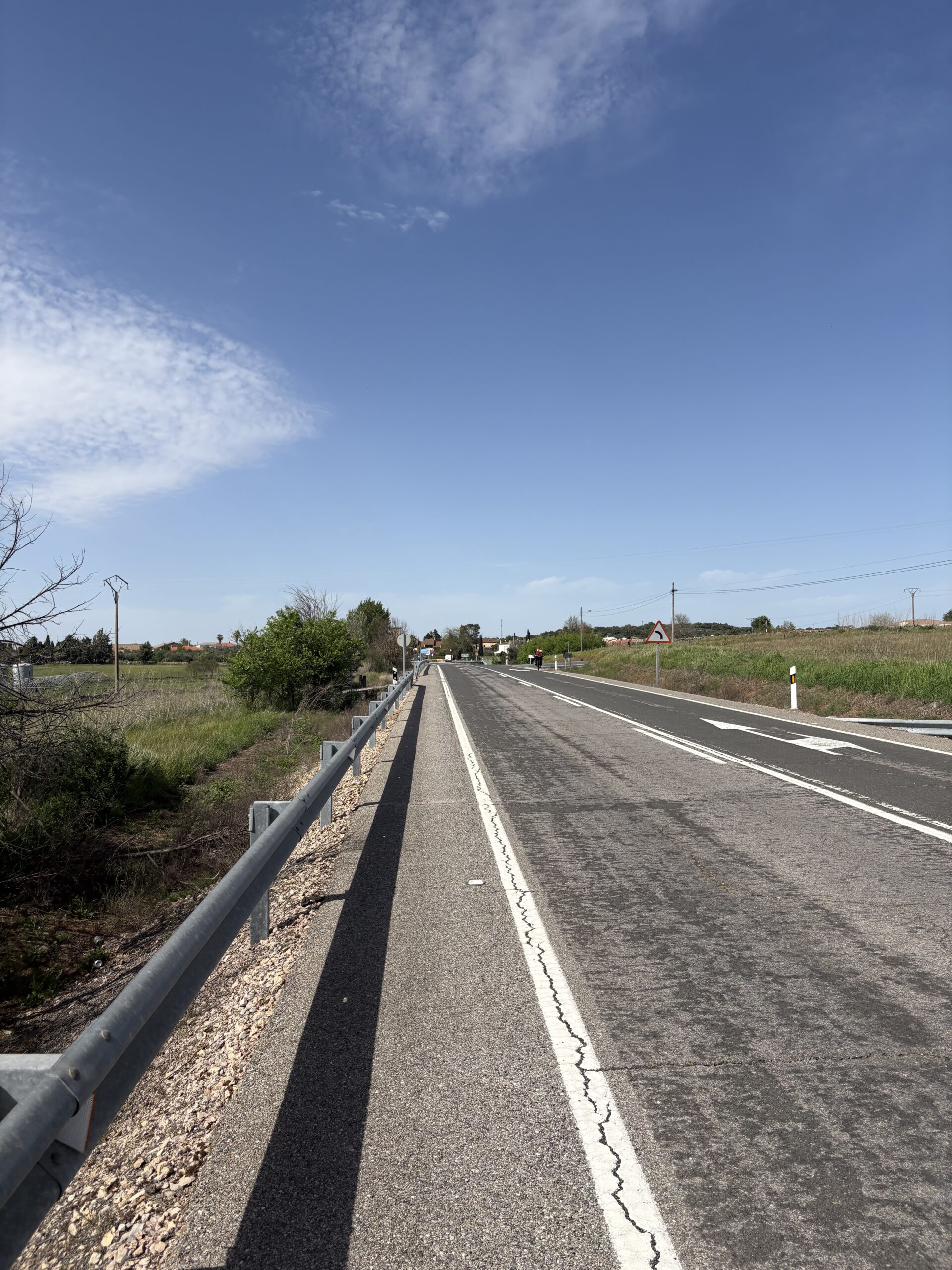
After lunch I continued, there is 16 km to the next village with accommodation. The route led out from Alcuéscar to farms and oil tree gardens. The dirt road felt good for my feet.
The sun is very strong, and there was basically no shade along the way for this half of the stage. I also started to run low on water. I felt the air heavy, possibly because of the approaching storm. There will be rain tomorrow, especially in the afternoon. Luckily I get to Cáceres before the heavy rain.
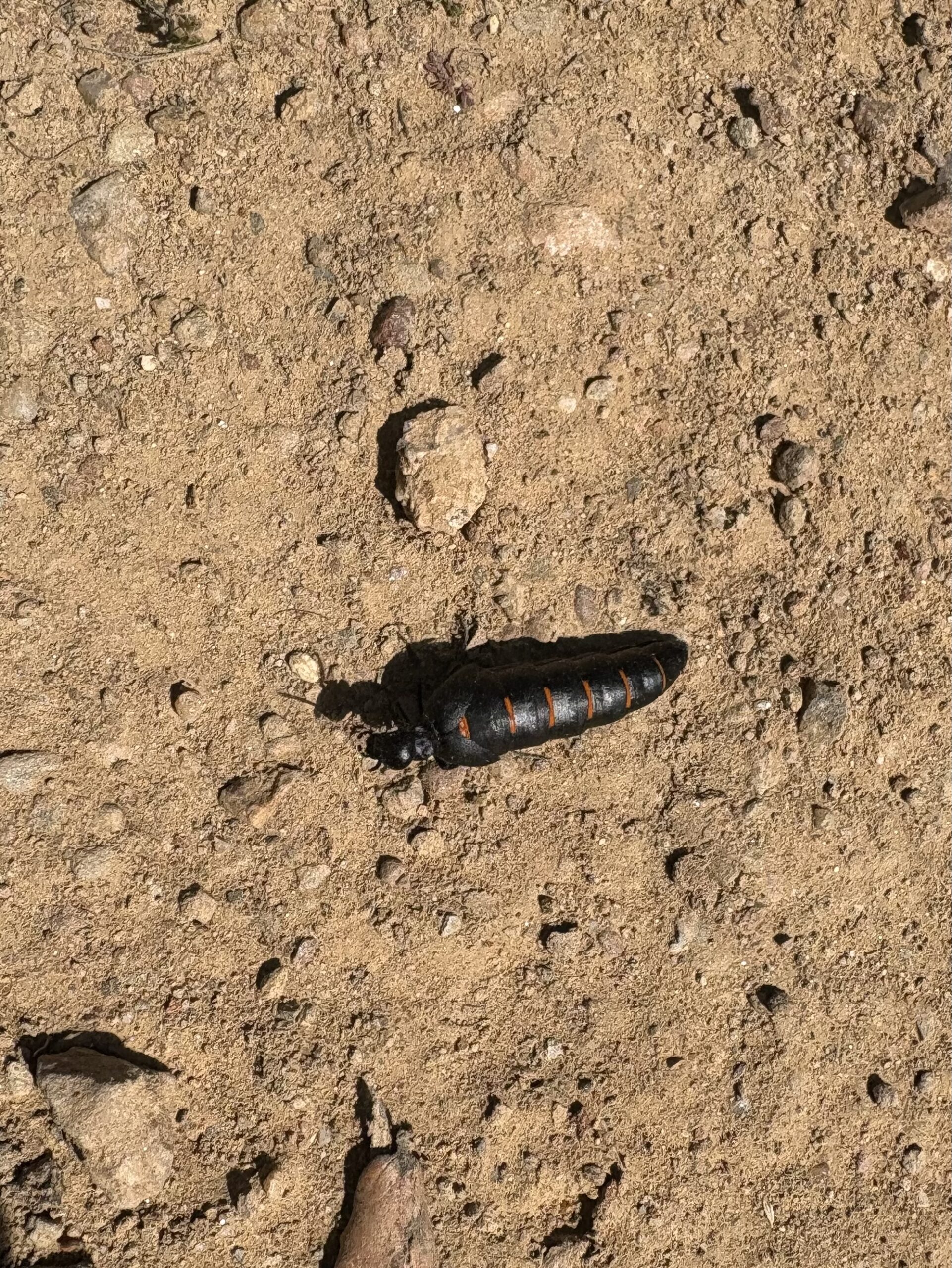
Today I saw thick columns of ants marching all over, which is already a clear sign of the upcoming rain. Another insect that caught my attention: about 3-5 cm long, large, chunky black body with bright red bands over the elongated abdomen. Berberomeloe majalis, commonly called the red-striped oil beetle, one of the most iconic insects of Spain. Cool to see, but best admired from a distance. Those red stripes are basically a big, honest warning sign. It can secrete a toxic substance (cantharidin), that causes skin blisters or burns if handled.
The last 6 km was difficult: oak-dotted pastureland with very little shade. For the last kms to the albergue I followed the main road. I met a Catalan cyclist who stopped for talking to me. He is cycling across Spain, he has been all over.
I arrived to Aldea del Cano at around 16:00. They have told me that there is one pilgrim already staying at the albergue. The door was locked. I have knocked, and to my surprise, the Irish piano teacher opened the door. We both were happy to see a familiar face.
The albergue was recently renovated and had a well-equipped kitchen, but for some reason it lacked warm water. So far in 2 out of 9 accommodations I had cold shower.
We went to the village to buy some grocery to cook dinner. Despite the size of the village, it was not easy to find a grocery store that’s open and according to the opening schedule. One, shown on GoogleMaps was closed, even surprising some locals. We cooked a zucchini pasta for dinner and had some terrible sweet white wine.
At 20:00 the storm has arrived with heavy wind and brought some fresh air.
Daily spending:
€17– lunch
€2– refreshment
€6 – grocery
€10 – accommodation