
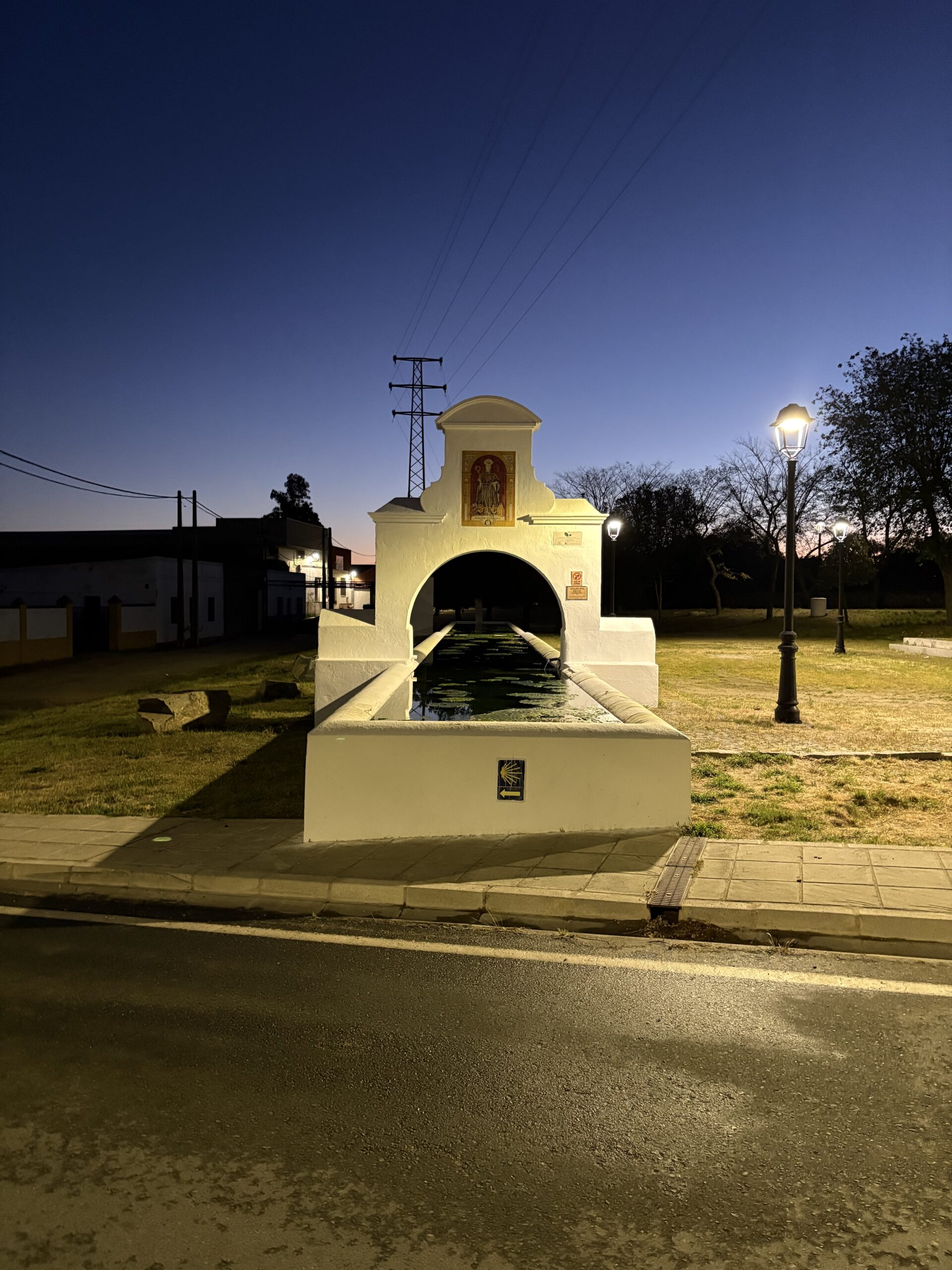
I had quite a pleasant sleep. I woke up a few times, but the earplugs did their job well. The bed was more comfortable than yesterday, although the overall quality of the albergue was lower. The less we talk about the grumpy hospitalero, the better.
I got up shortly before 7:00, had a quick breakfast, packed my bag, and left the albergue. It was still dark and rather cold outside; I had to put on gloves, my cap, and my jacket. A café was open at this early hour with some local men having coffee before the early shift, and I stopped for a cortado.
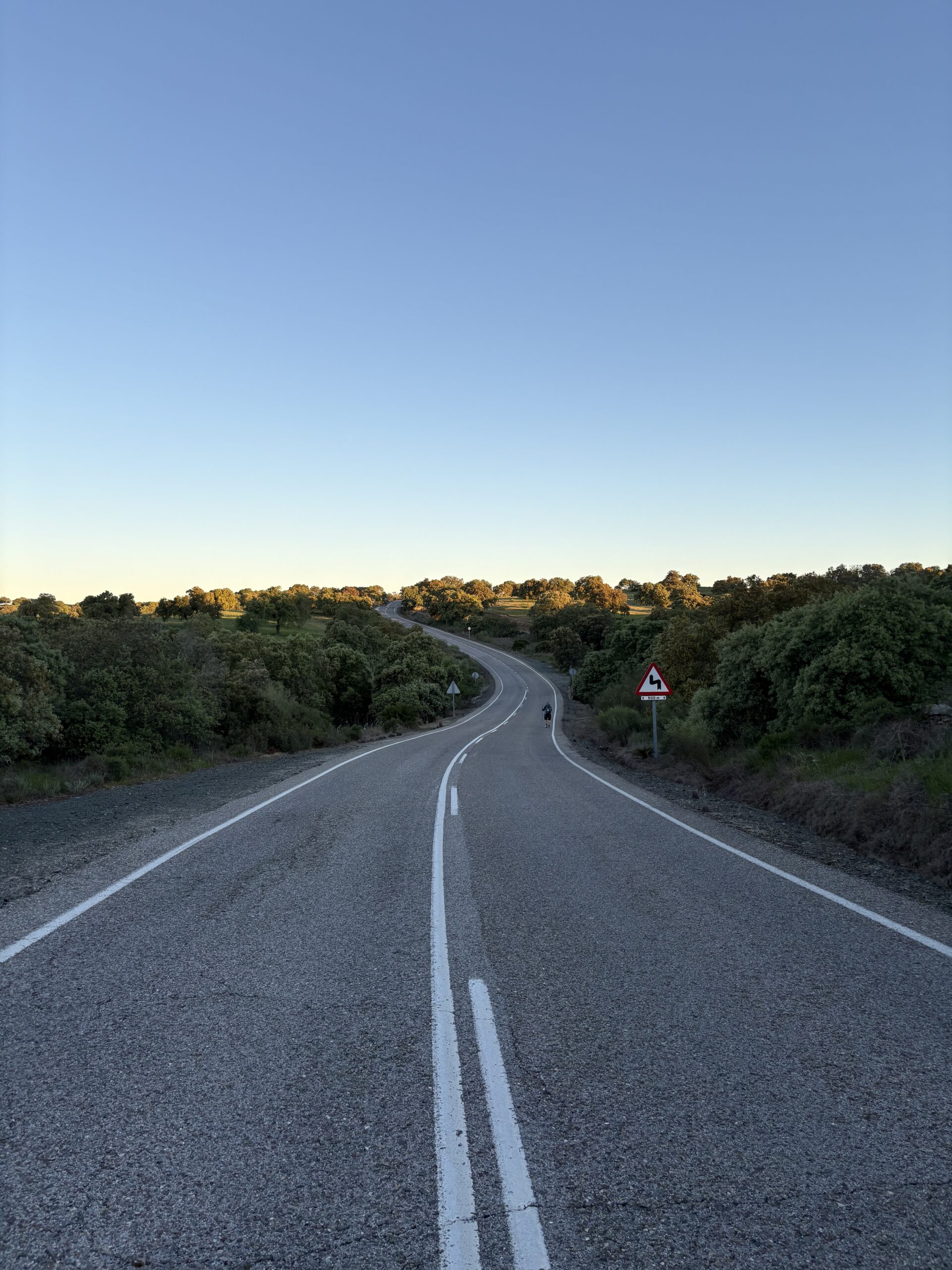
The route left Castelblanco along the road SE-5405. The traffic was light, but for about an hour I had to use my headlights to avoid an accident. Occasionally the Camino follows roads where cars commute. I recommend walking on the left side across the traffic so you will notice if a car is passing by dangerously close.
After 10 km, the trail detached from the road and ran next to it. It was more convenient to walk on a dirt road; nevertheless, I gained some impressive speed on the asphalt. After 15 km, I stopped to change socks and rest a bit. I noticed that I left my banana and all my protein bars in the albergue. Well, maybe someone needs them more than I do.
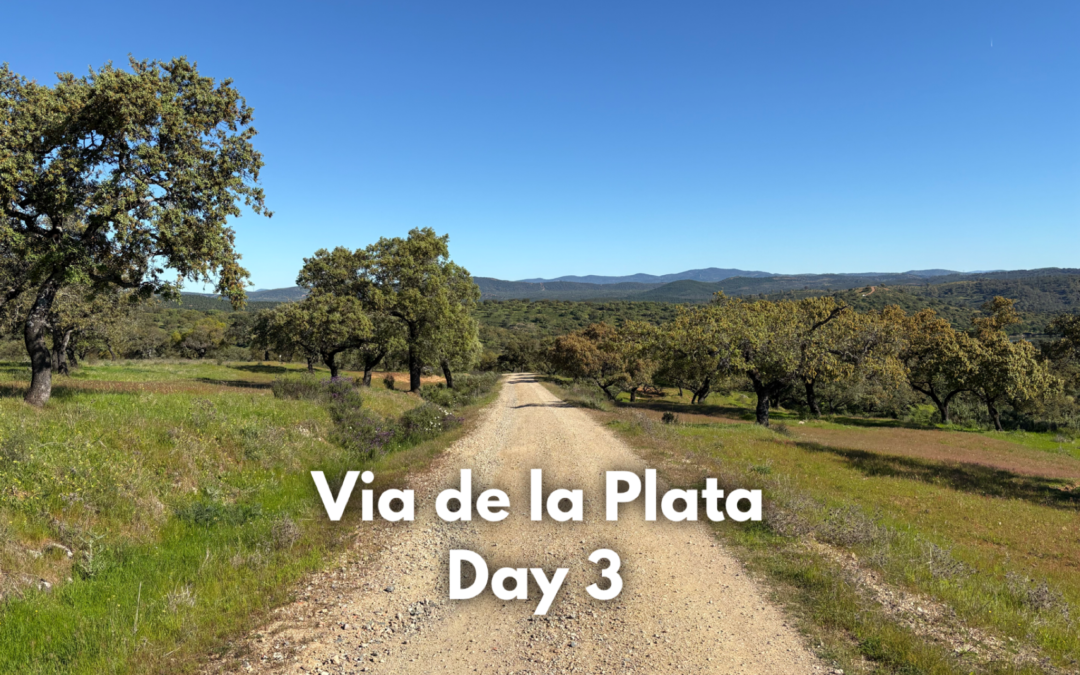
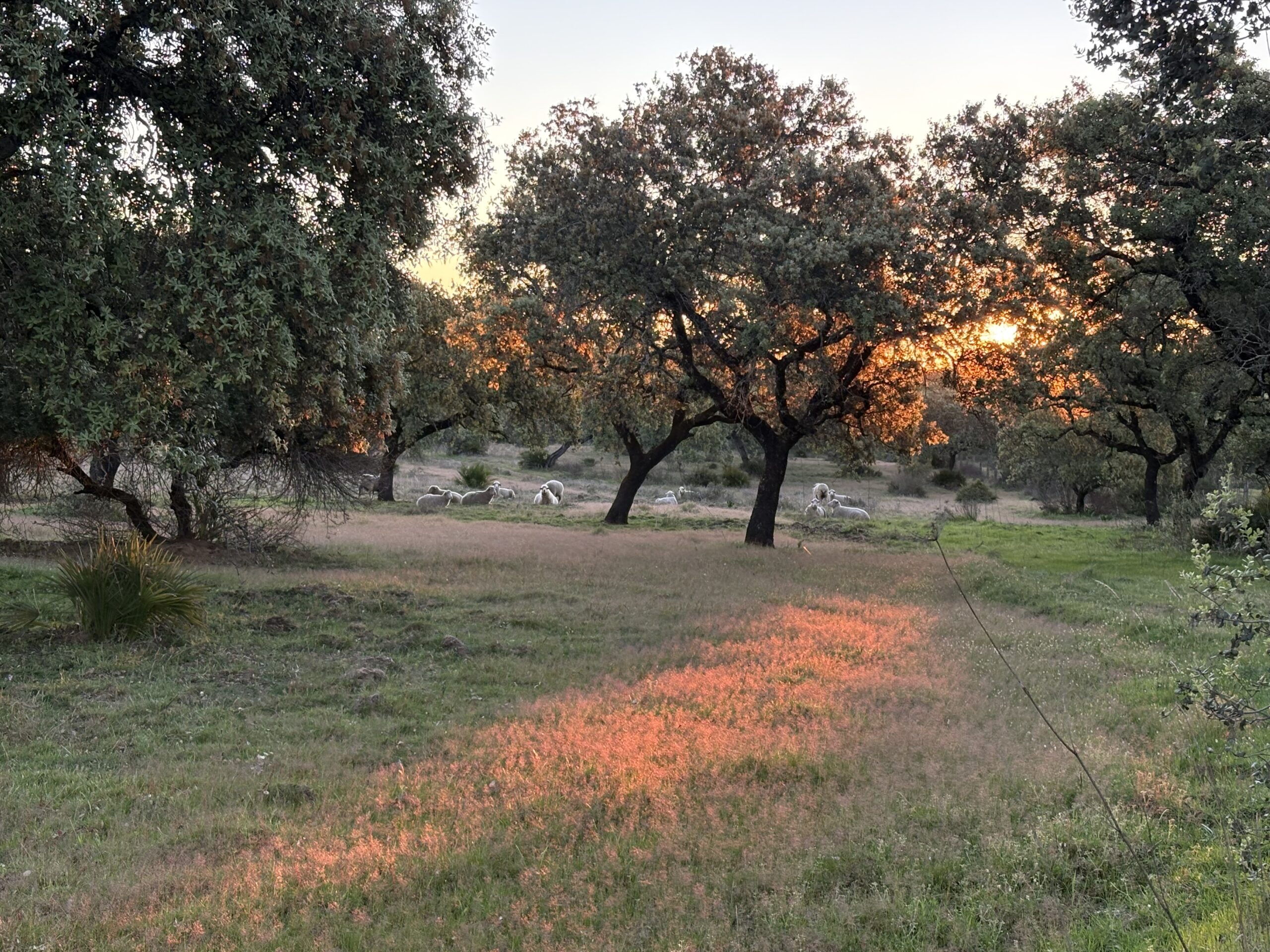
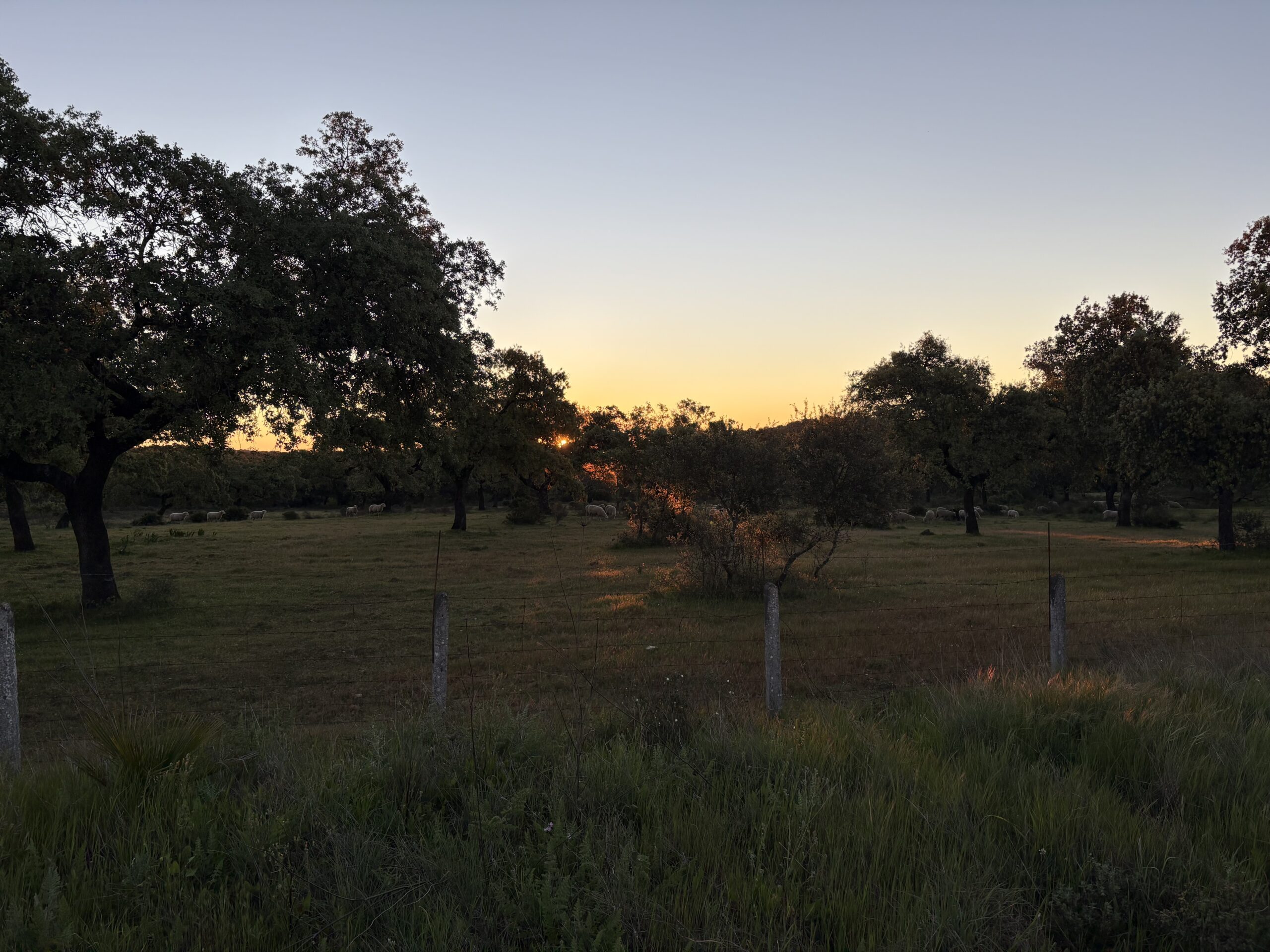
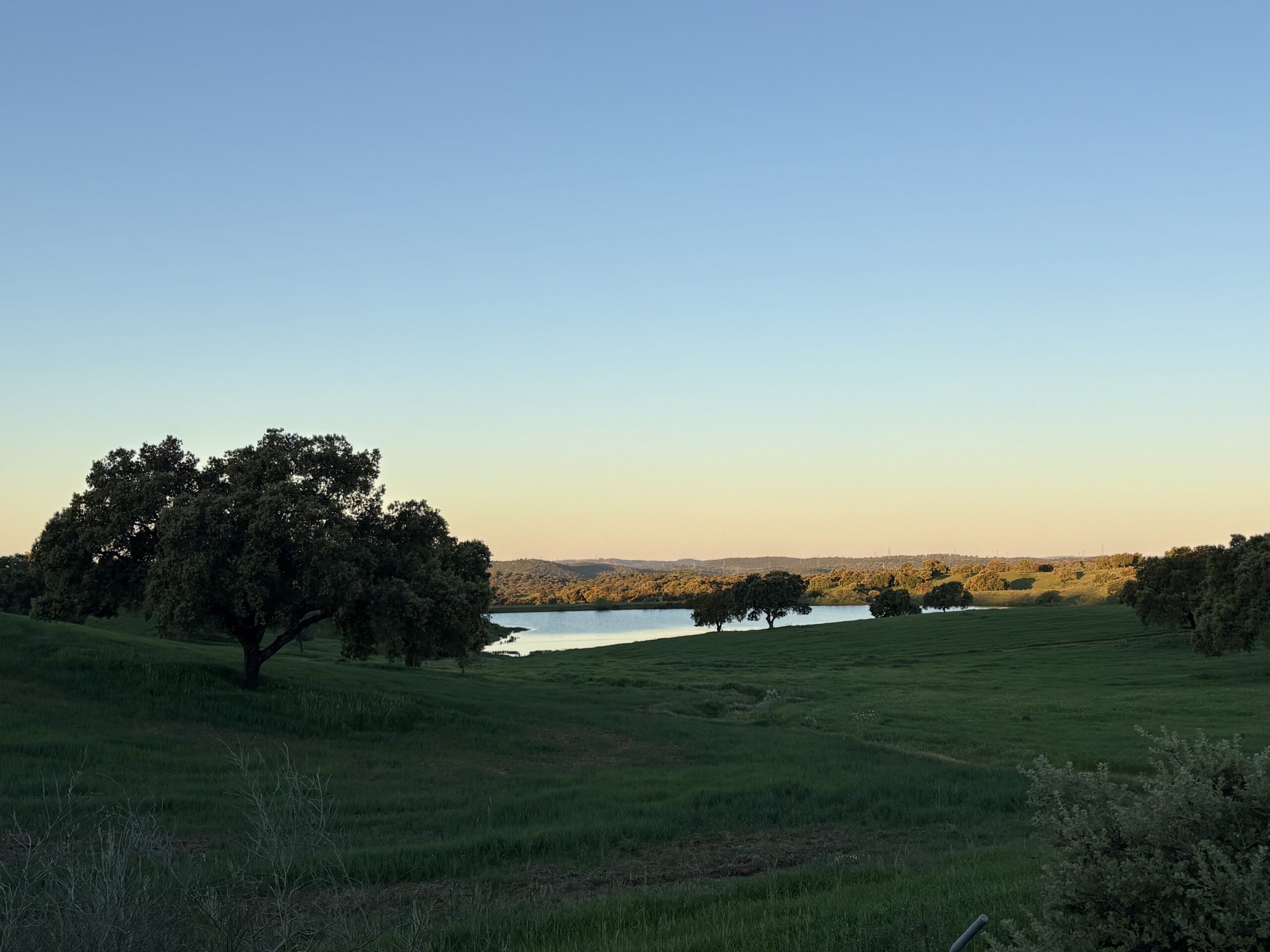
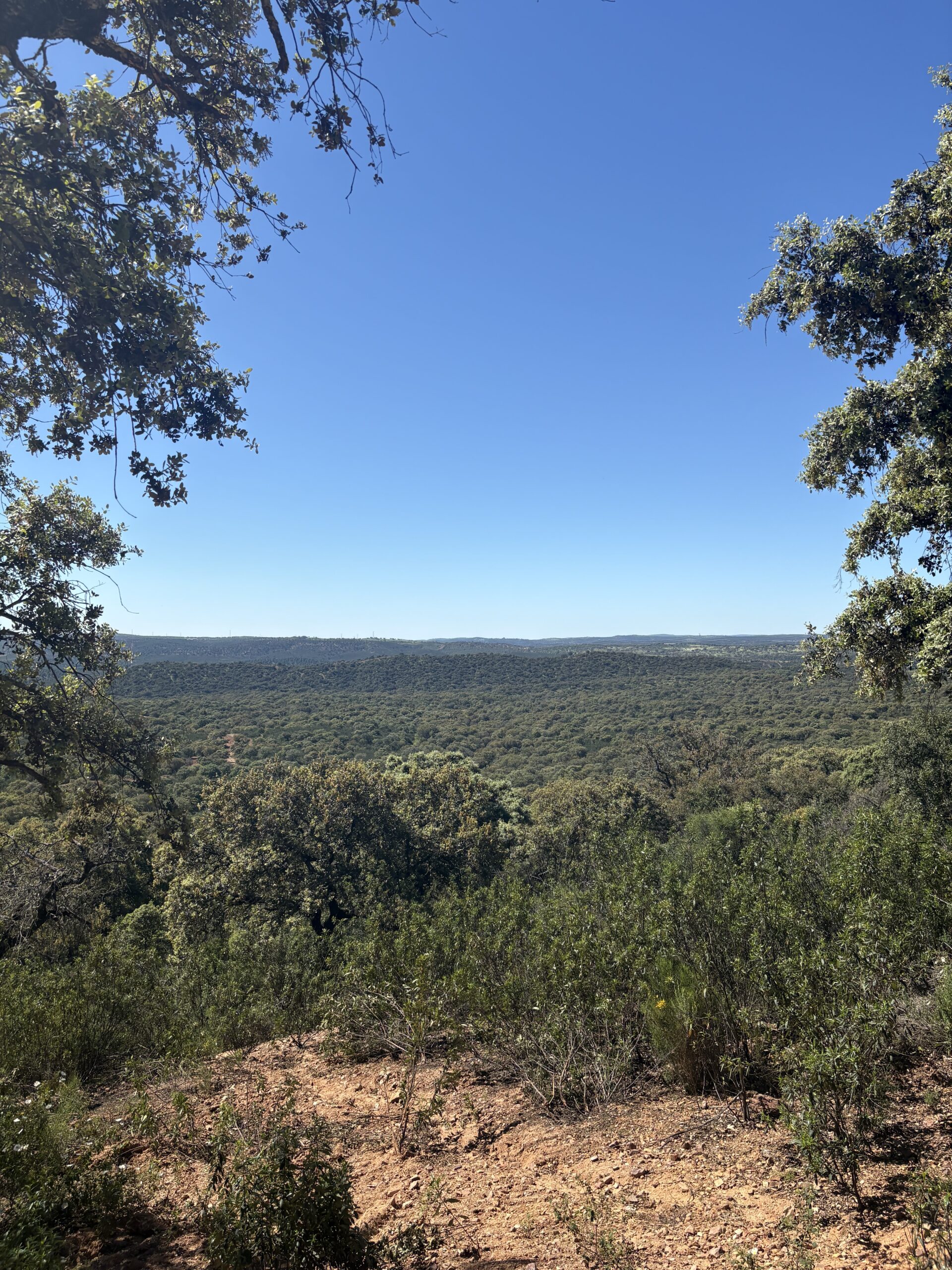
I noticed that the landscape gradually transitioned into classic ‘dehesa’, with scattered holm oaks and grazing livestock. Rather than being completely wild, the dehesa is the result of centuries of human activity. Forests were thinned to create wide, park-like spaces where livestock, such as sheep, cattle, and the famous Iberian pigs, could graze. The trees are carefully maintained, providing shade, acorns for animals, and products such as cork. What makes the dehesa distinctive is its balance between agriculture and nature. To me, it feels like I’m hiking in a natural park somewhere in the African Savannah. The weather forecast promised a hot, sunny day too.
It supports high biodiversity while remaining economically productive, and its gently rolling terrain, scattered trees, and long horizons give it a very distinctive appearance.
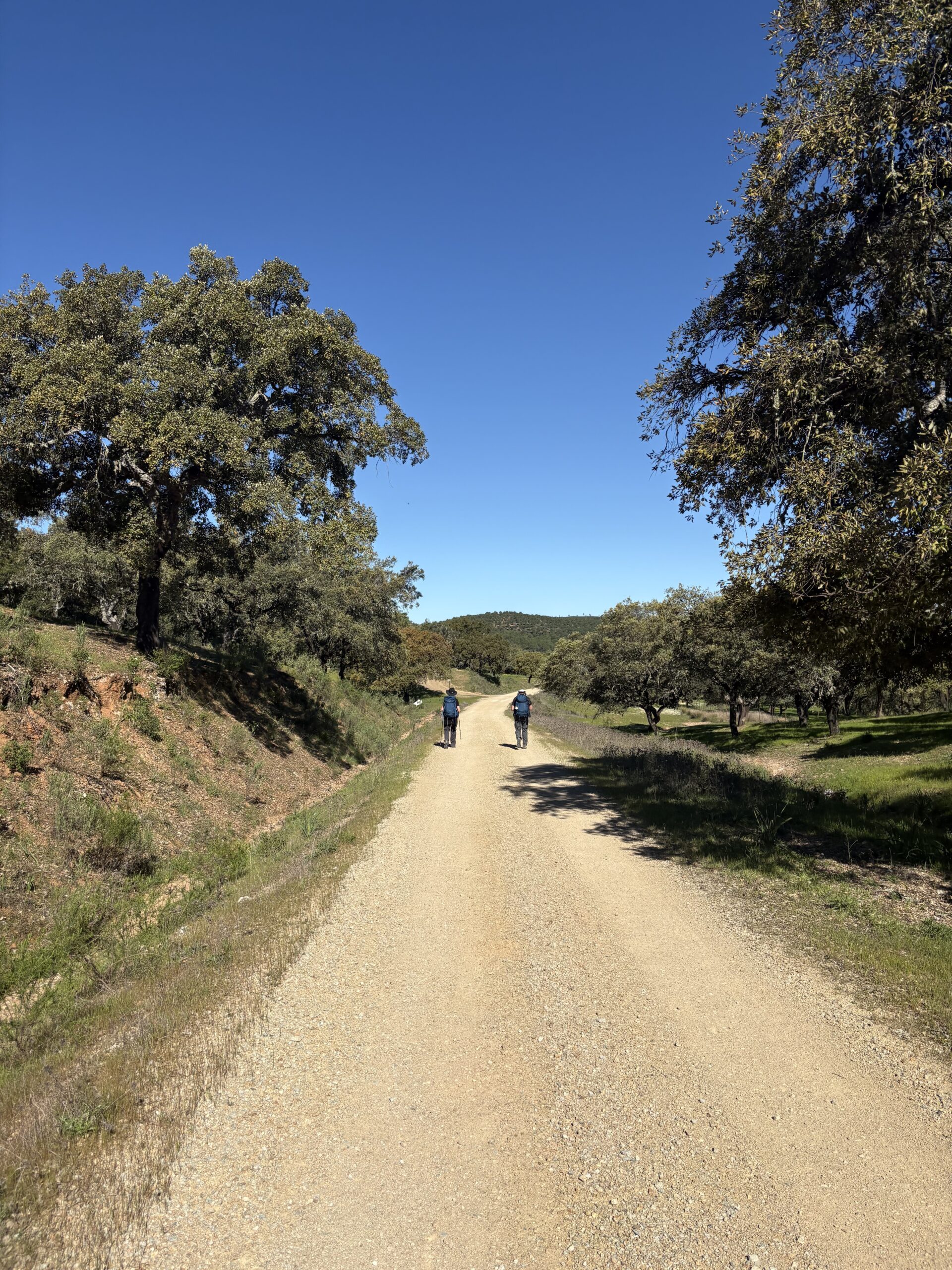
Along the way I met two Brits, men in their 50s-60s, and a Slovenian and a German man who walked together for days. The German was from Heidelberg, and he told me last time to walk quicker when I complained that they used all the hot water. I passed them, saving my hot shower.
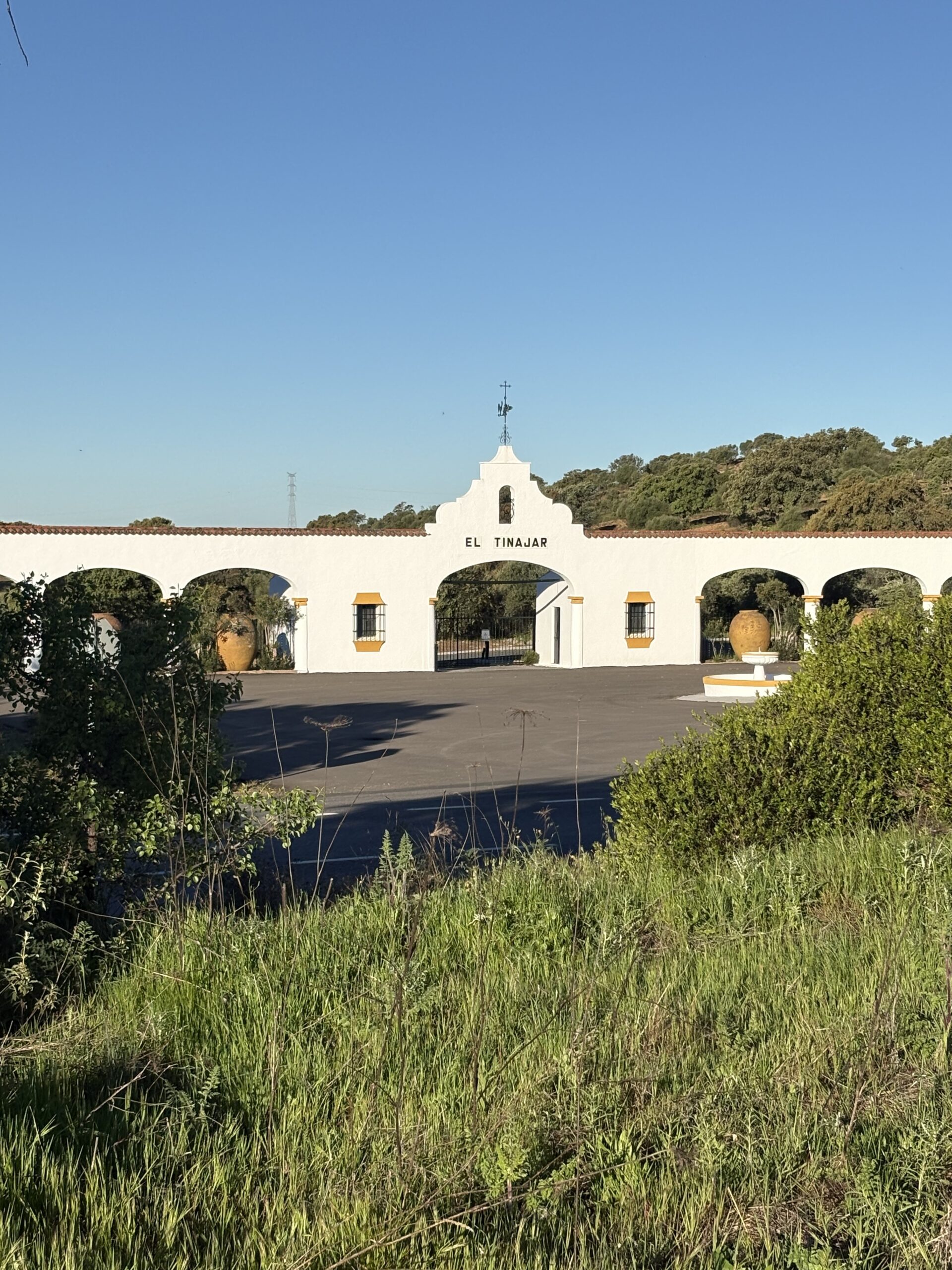
The second half of the stage went through the natural park area. The view was beautiful. Fresh creeks, green fields, redwoods, oak trees and olive trees. The birds are singing, and the wind carries the scent of resin and eucalyptus. I stopped at the forester’s ranch to refill my water at the well. I haven’t seen any signs of it being drinking water (agua potable), but it should be good. I am already 2/3 of the stage, so I will use it only in an emergency.
The last 5 km was a tough steep climb up and then down. I was already starving but I knew that over the hill the town waits for me. It was a demanding day, but I pushed through quickly.
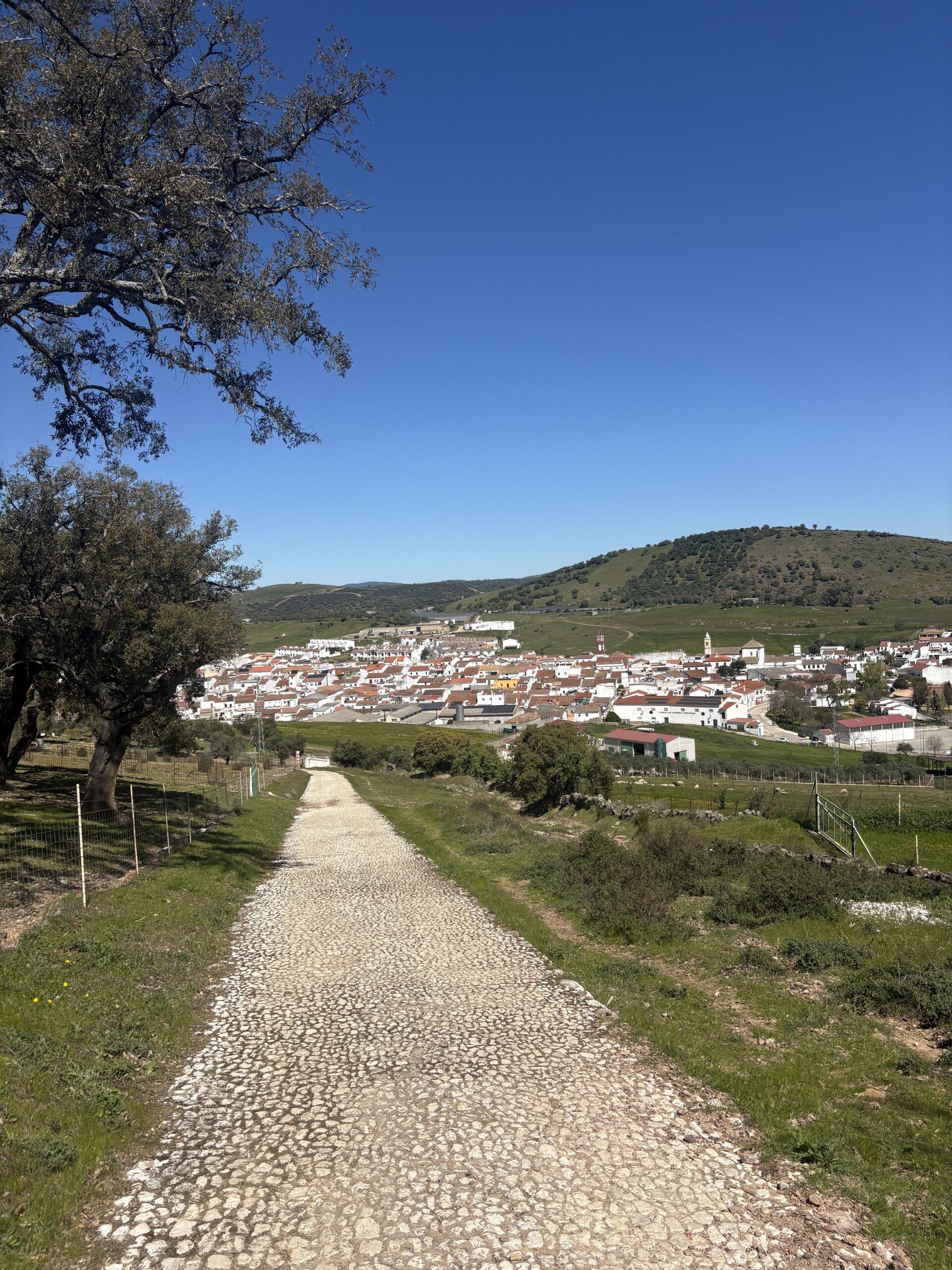
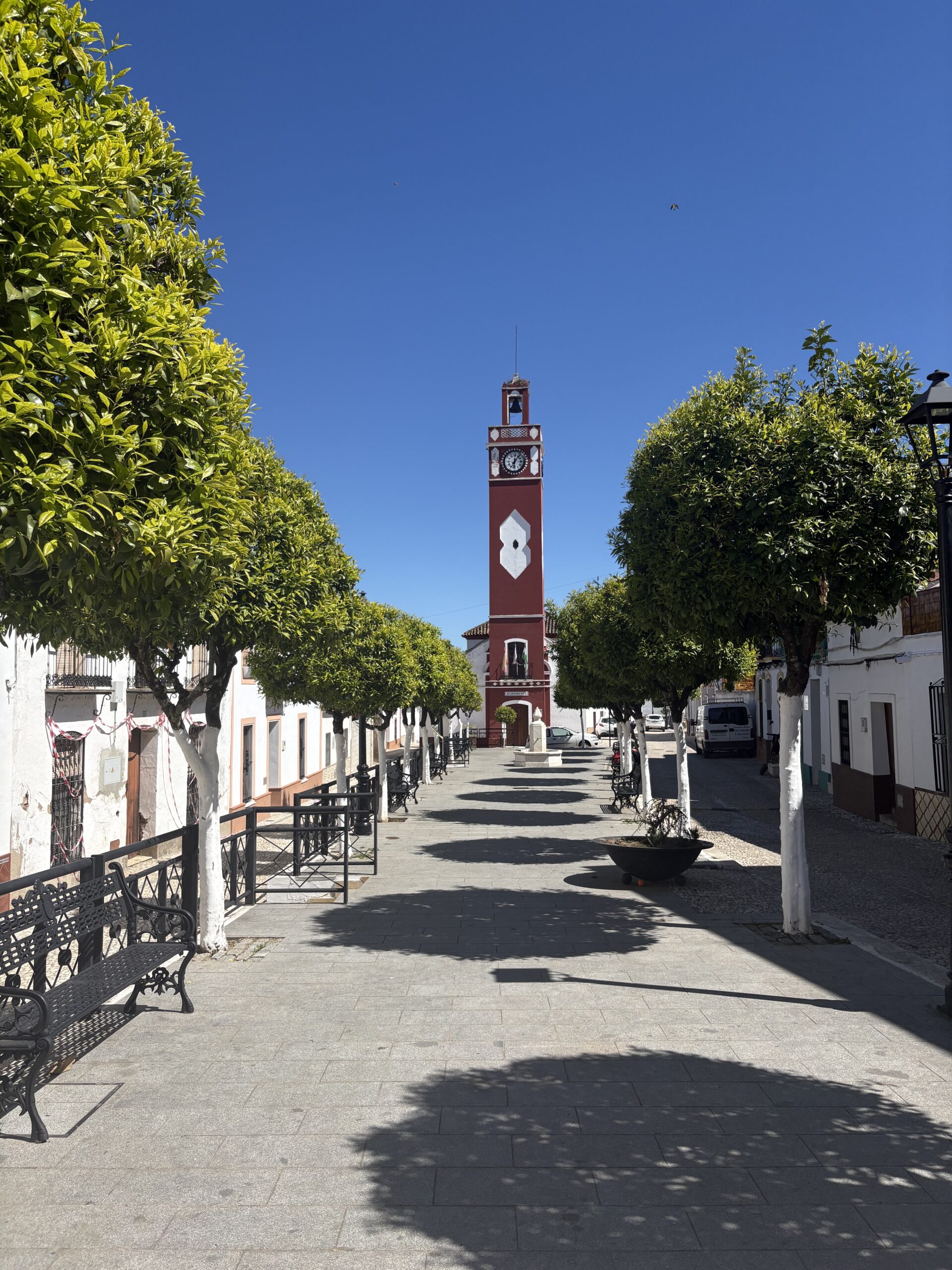
Upon arriving at the albergue I had reserved yesterday, a rather small one that quickly filled up, I found no one waiting. The door was open; my bed was assigned with a note (Victor reservado), and they will stamp our pilgrim’s pass and collect the money after 19:00.
I took a shower, washed all my clothes, and hung them to dry. Afterwards, I walked to a restaurant one of the local old ladies recommended. The pilgrim’s menu was refreshing, and the portions were excellent. I drank 3 Aquarius (isotonic drinks with lemon flavour), had a salad with tuna as a starter, and had beef ribs with potato chips as a main course. At the end, I even had some local dessert. This late lunch at around 15:00 was life-saving.
After lunch I had a short nap and checked the videos I recorded. I booked a room for tomorrow. After 3 days in pilgrim shelter, I deserve a good sleep in a comfortable bed and in solitude. Two difficult days are coming with 36 and 45 km distances.
Daily spending:
€16.50 – lunch
€14.50 – grocery
€12 – accommodation