
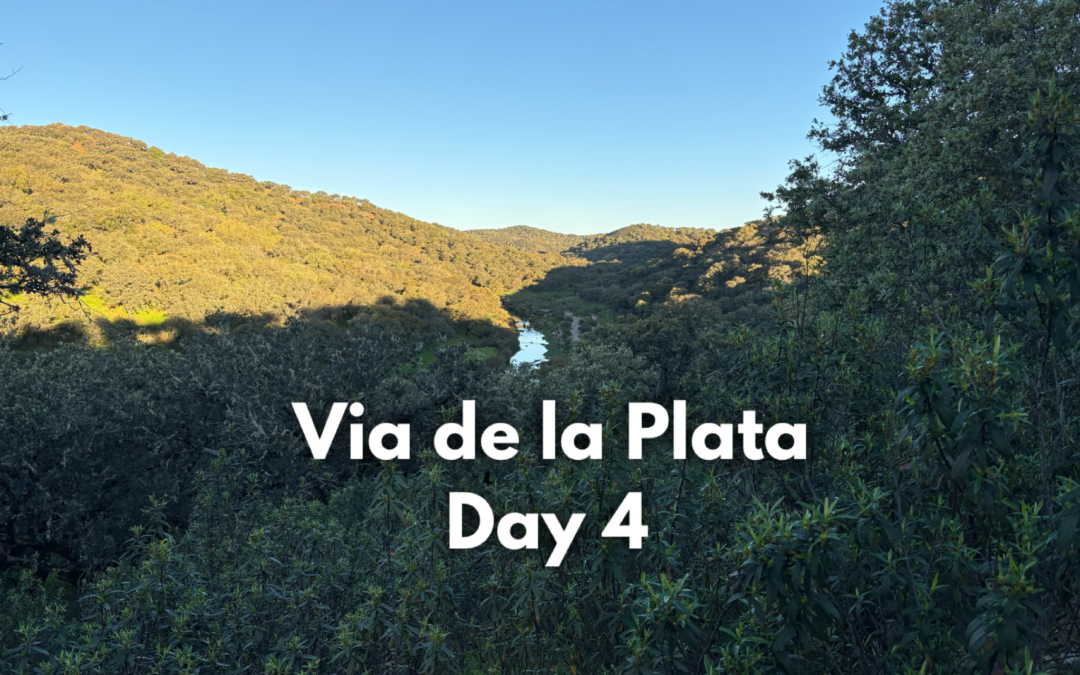
I got up before 7, packed my bag and had some doughnuts for breakfast. At 7:30 I was already on my way. I left Almadén still in the dark and was rewarded with a beautiful setting moon. It felt like the golden coin in the sky was wishing me ‘buen camino’ and handing me over to the protective eyes of the sun just rising on the other side of the horizon.
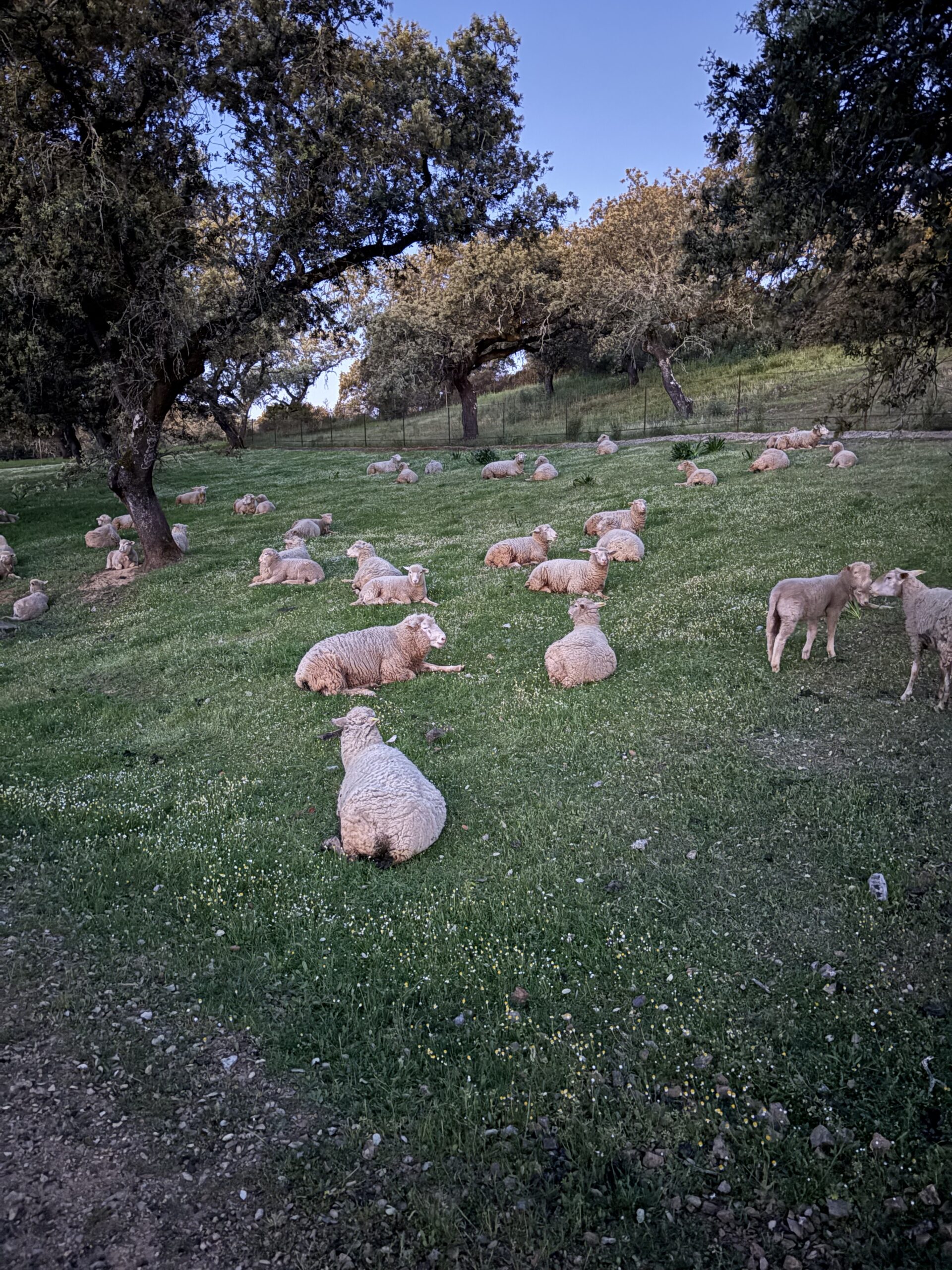
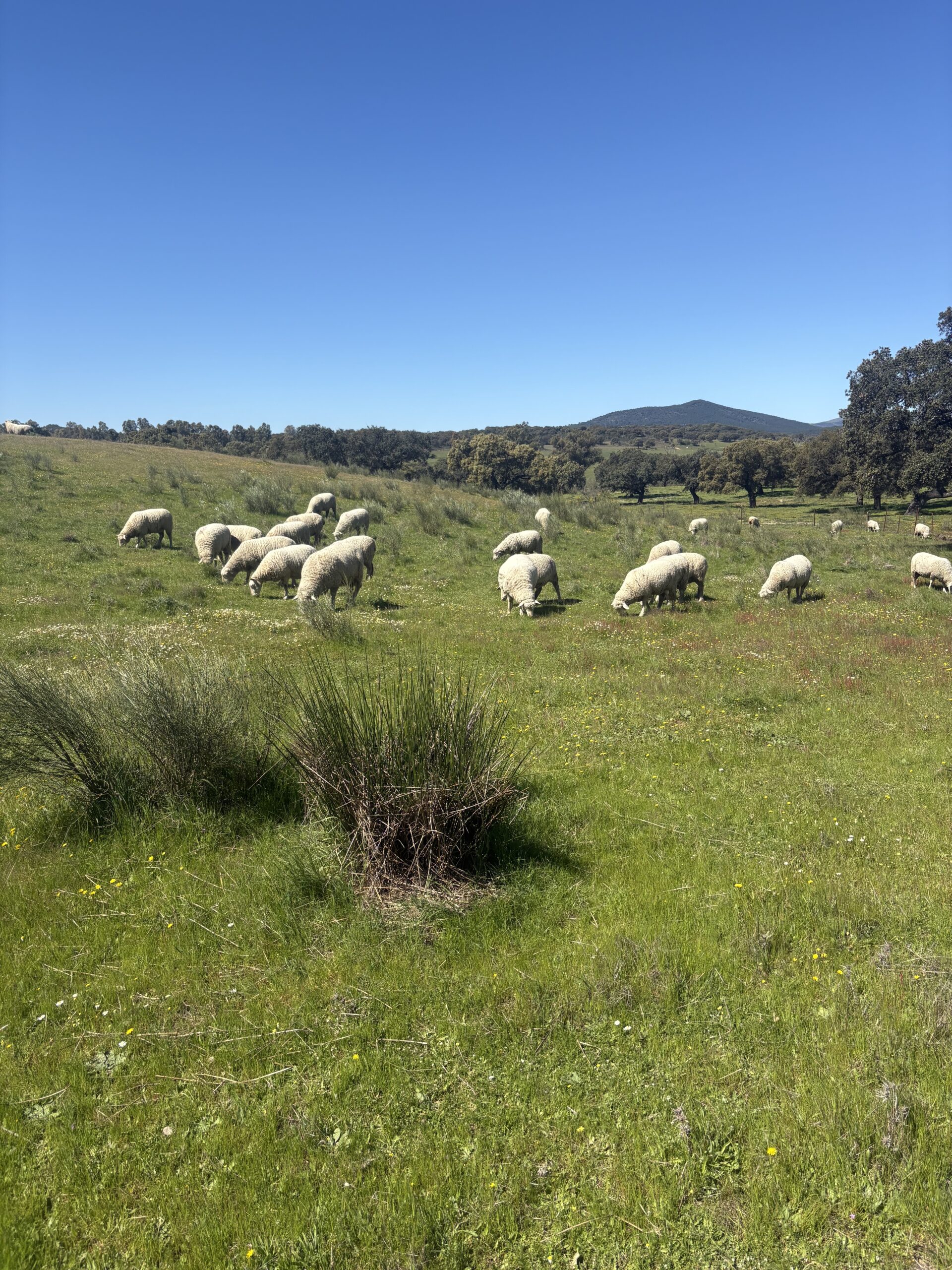
The route continued in the mountains of Sierra Morena with gentle climbs, flocks of sheep, and horse studs all around. A few kilometres before El Real de La Jara, I caught up with the Ukrainian pilgrim. She hurt her ankle yesterday, so she was in pain, walked slowly and decided to stop in the village. I companioned her and tried to distract her from the pain. In the village I had breakfast and bought kinesiological tape to secure her ankle. I had to do this to myself a couple of times in the past, but it’s much easier if someone helps. I wished her a speedy recovery and good luck and continued toward my daily destination. I am only one-third of the way to Monesterio, so it is time to speed up.
Lesson to learn: always pay attention to your body. There are days, especially if you have an injury, when you need to stop and adjust your plans. Don’t push yourself to the limits. It’s a good thing that the pilgrims are kind and watching each other, and some of us are even trained to give first aid. You can find well-equipped pharmacies even in small villages where you can buy plasters, tape, sun lotion and basic medication.
I am reaching the end of the Sierra Morena and with this saying farewell to Andalusia too. As a tribute to Andalusia, I tell you the legend of El Tempranillo, one of the most famous outlaw stories in Spanish folklore. El Tempranillo was a 19th-century bandit born around 1805. His nickname means “the early one” because he supposedly started his criminal life very young. He became a bandit leader in the rugged mountains of Sierra Morena.
His gang robbed travellers, but according to legend, he followed a code of honour: he avoided harming the poor, he treated women with respect and he often targeted the wealthy or corrupt. Because of this, people began to see him as a kind of Spanish Robin Hood figure.
Instead of being hunted forever, El Tempranillo was eventually pardoned by the authorities. He was even appointed as a kind of rural protector, tasked with keeping roads safe from other bandits. Despite his pardon, his life didn’t end peacefully. He was ambushed and killed at a young age, around 28.
El Tempranillo became a symbol of rebellion against injustice, honourr among outlaws and the idea that even criminals can have moral codes. His story still lives on in Spanish culture through books, oral traditions, and even tourist routes in Andalusia.
Nowadays, the Camino is safe to walk even solo. The authorities pay attention to the pilgrims, if you witness a crime or you have been a victim of a crime on Spain, you should report it to the police. They take these very seriously and they are very supportive.
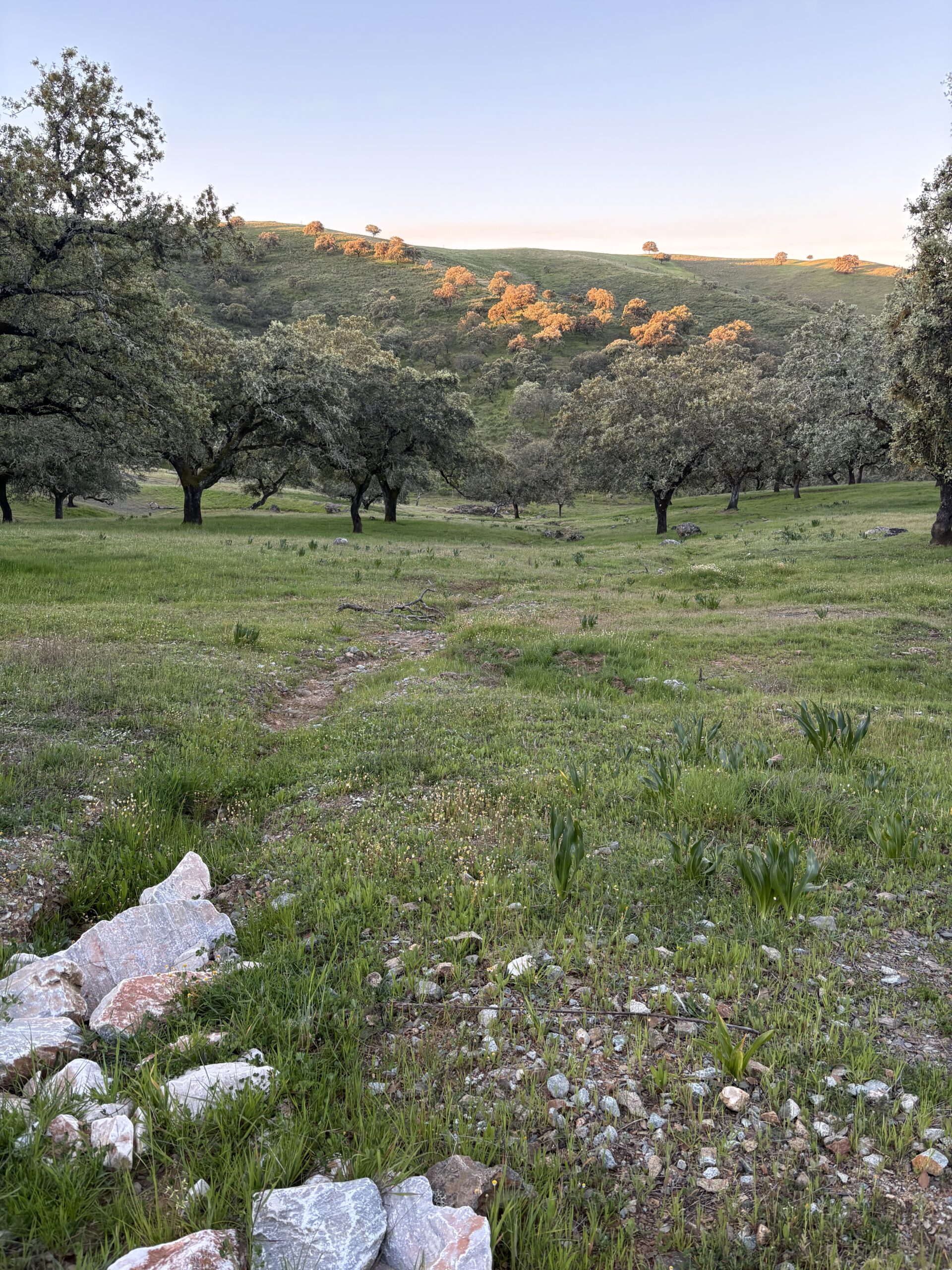
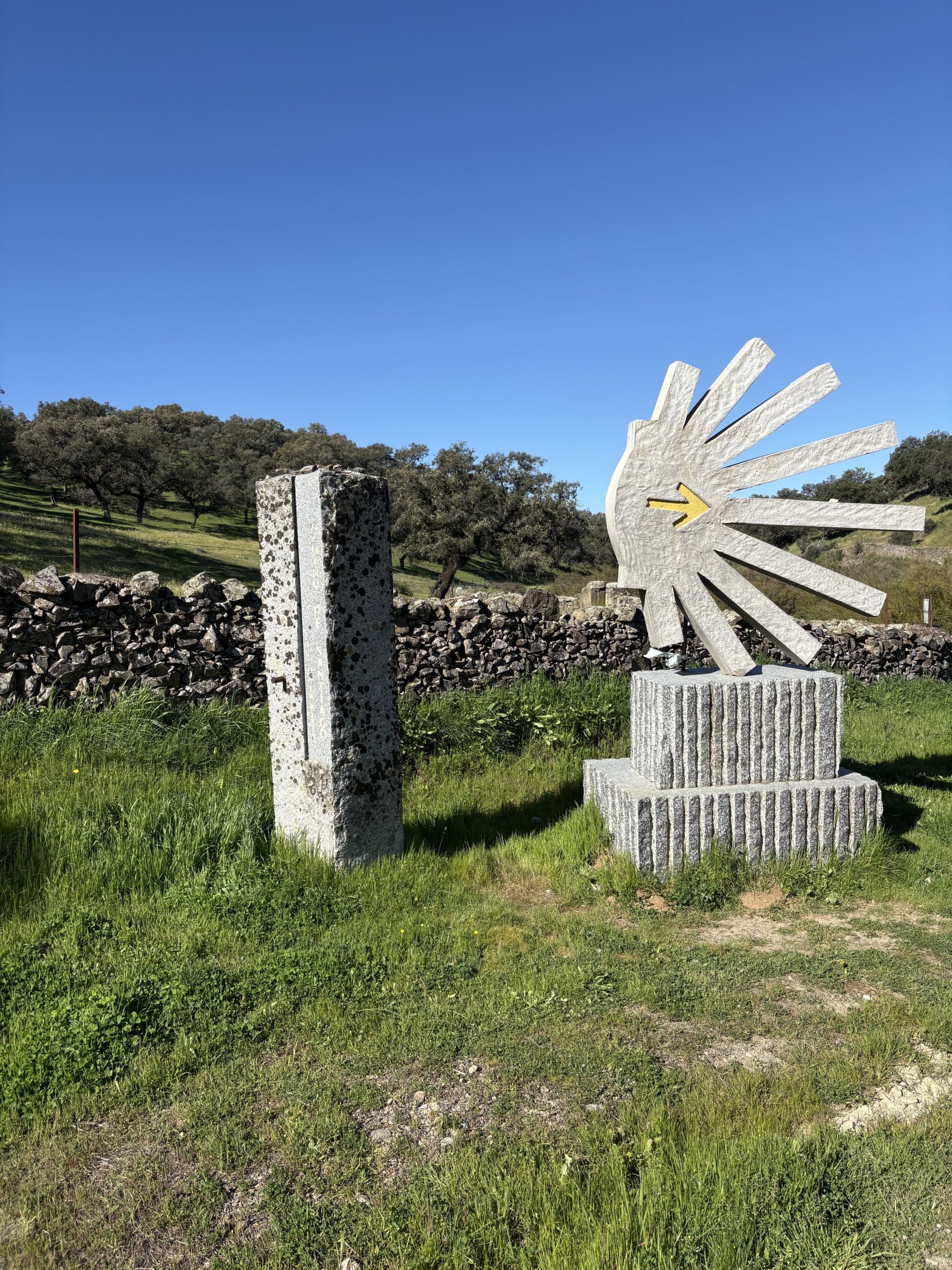
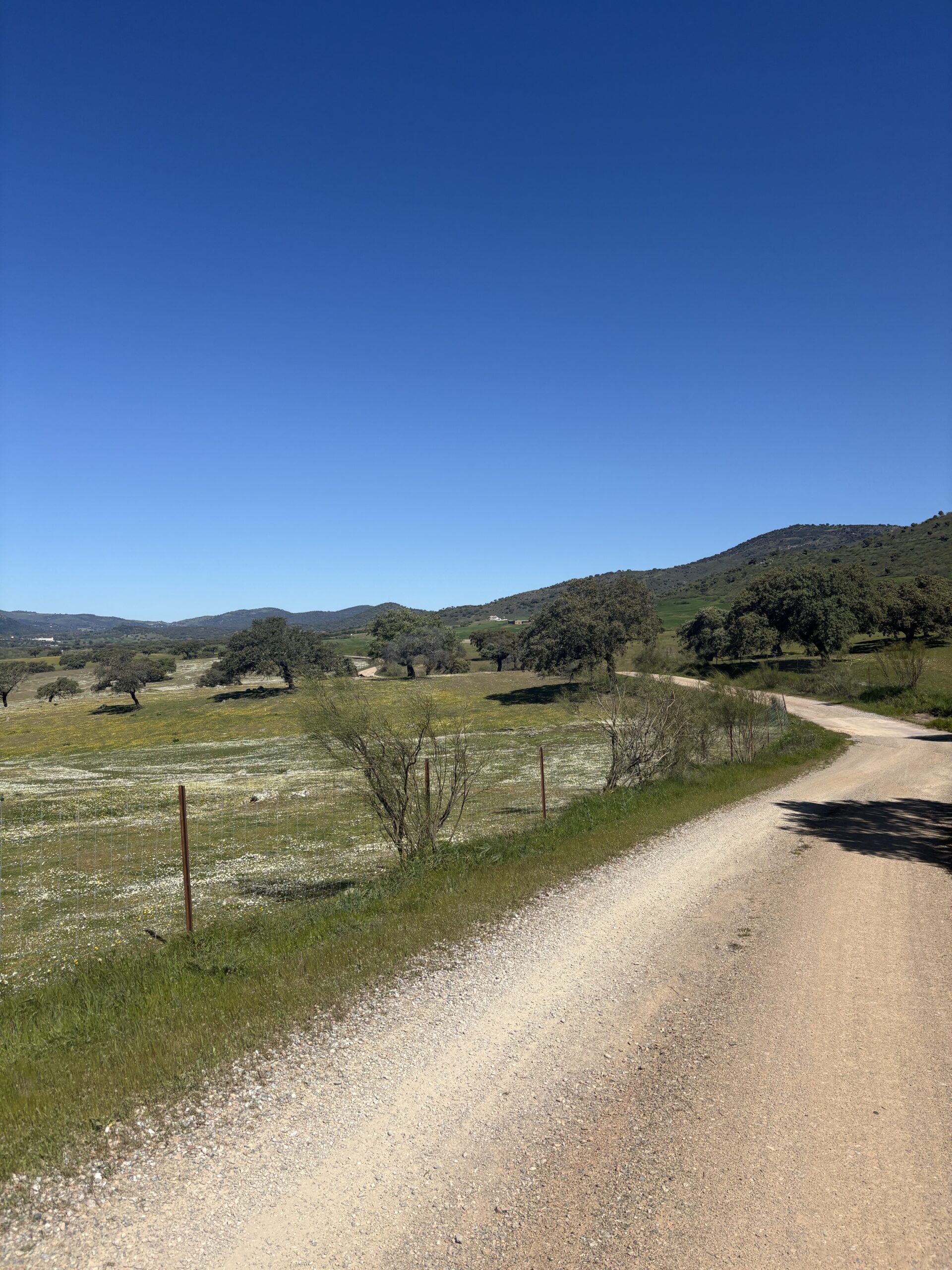
I crossed the border from Andalusia to Extremadura; there was a small creek that I had to cross by stepping from one stone to another. After that I met a Spanish pilgrim from Sevilla. He finishes in Monesterio and goes back to Sevilla.
I assumed there would be another stop somewhere at two-thirds of the stage at Saint Isidor Hermitage, however, was an abandoned place. It looked like a campsite without any campers, with lamps in the middle of the field, but I think they use it for big celebrations and pilgrim masses. It’s a bit surreal.
I stopped after a big motorway intersection with gas stations. I ate my banana and some snacks and drank some water. Now a final push, 10 km to go. The trail followed the side of a road and zigzagged across the road, but there was not much traffic.
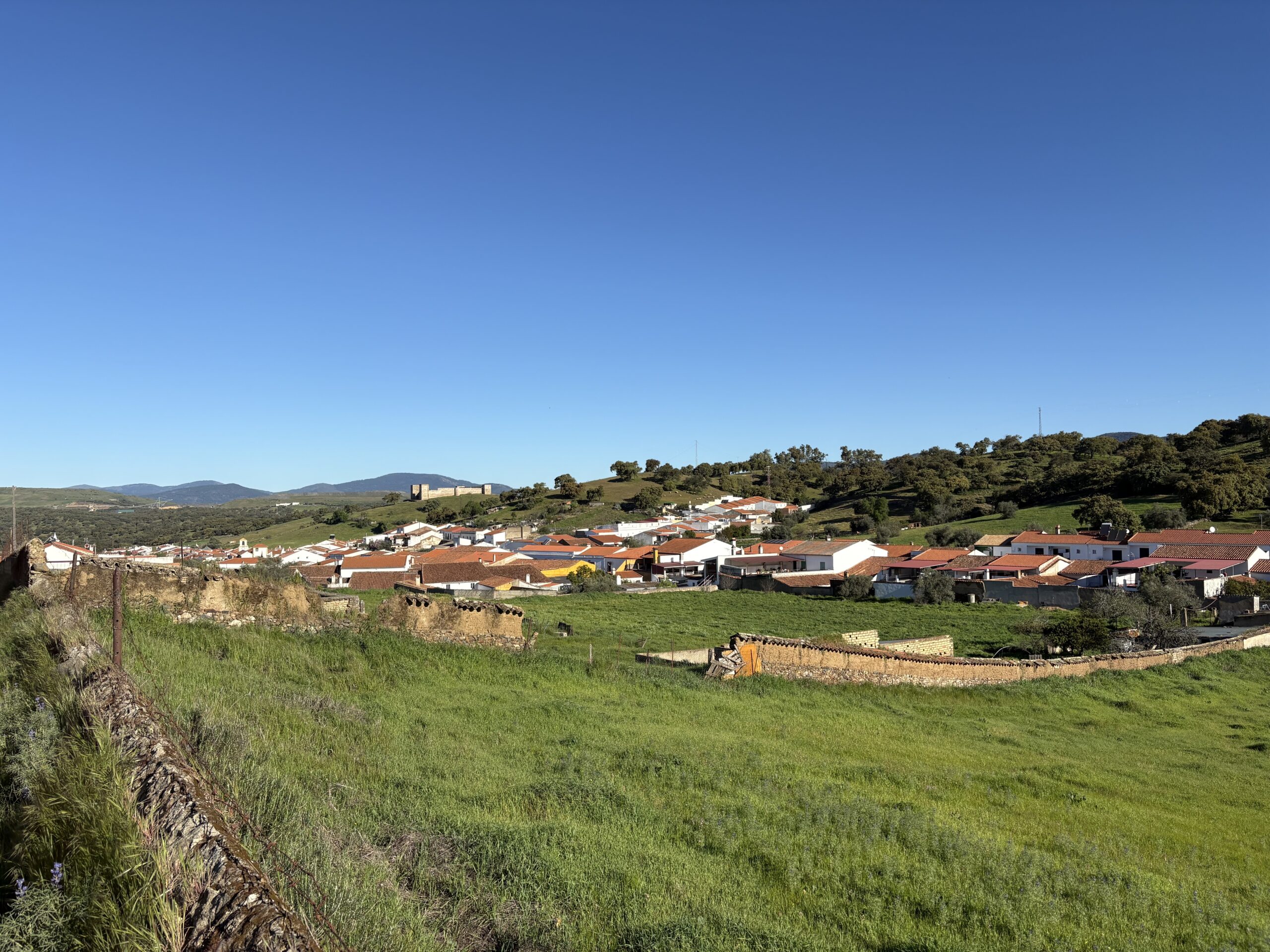
I arrived in Monesterio shortly before 15:00. A Belgian lady, whom I already met yesterday at the albergue, already called the receptionist. The hotel is clean and neat, but unfortunately the bed is too soft for me; my lower back hurts, so I might have a rough night. I take a nap to find out.
Monesterio sits right in the heart of the Dehesa, a unique landscape of oak forests where Iberian pigs roam freely and feed on acorns. It’s been said this natural diet is what gives Jamón Ibérico its rich, nutty flavour.
Before having dinner I have also tried out their ham, and I already know where I will get breakfast tomorrow before my longest stage.
Daily spending:
€4.95 – pharmacy
€14.00 – dinner
€40 – accommodation